Patagonia
The flight from Santiago to Punta Arenas was just a couple of hours, but wow was it ever spectacular. The route takes you over all the Andes Mountains, and particularly this time of year, they were all still covered in snow. From the plane we saw countless snow-capped mountains, glaciers, and glacial lakes. It was breathtakingly beautiful. Landing in Punta Arenas, we were suprised to see how large of a city it actually was. My only previous experience with Patagonia was when I went to Coyhaqiue four years prior. Coyhaique is a town fairly north in Chilean Patagonia, and it is very small. Both of us just assumed that all towns in Patagonia, especially when you go further south, would be like that. While we can’t say that Punta Arenas was a massive city, it was much larger than we expected.
One thing we noted right away was the difference in climate. In the north, it is hot, sunny, and dry. In Santiago, spring had very much already begun. In Punta Arenas, however, which is part of the Chilean Antarctic, winter still had a fairly strong grip. Probably for the locals it felt like spring was starting, but for us, having come down from the North, it was a little bit of a shock. I asked our taxi driver from the airport if it ever gets hot here. He responded saying “Oh yes, it gets very hot. In the summer it can be between 15 and even 25 degrees!”. I am not sure if that is what I’d called very hot but hey - I guess it’s relative?
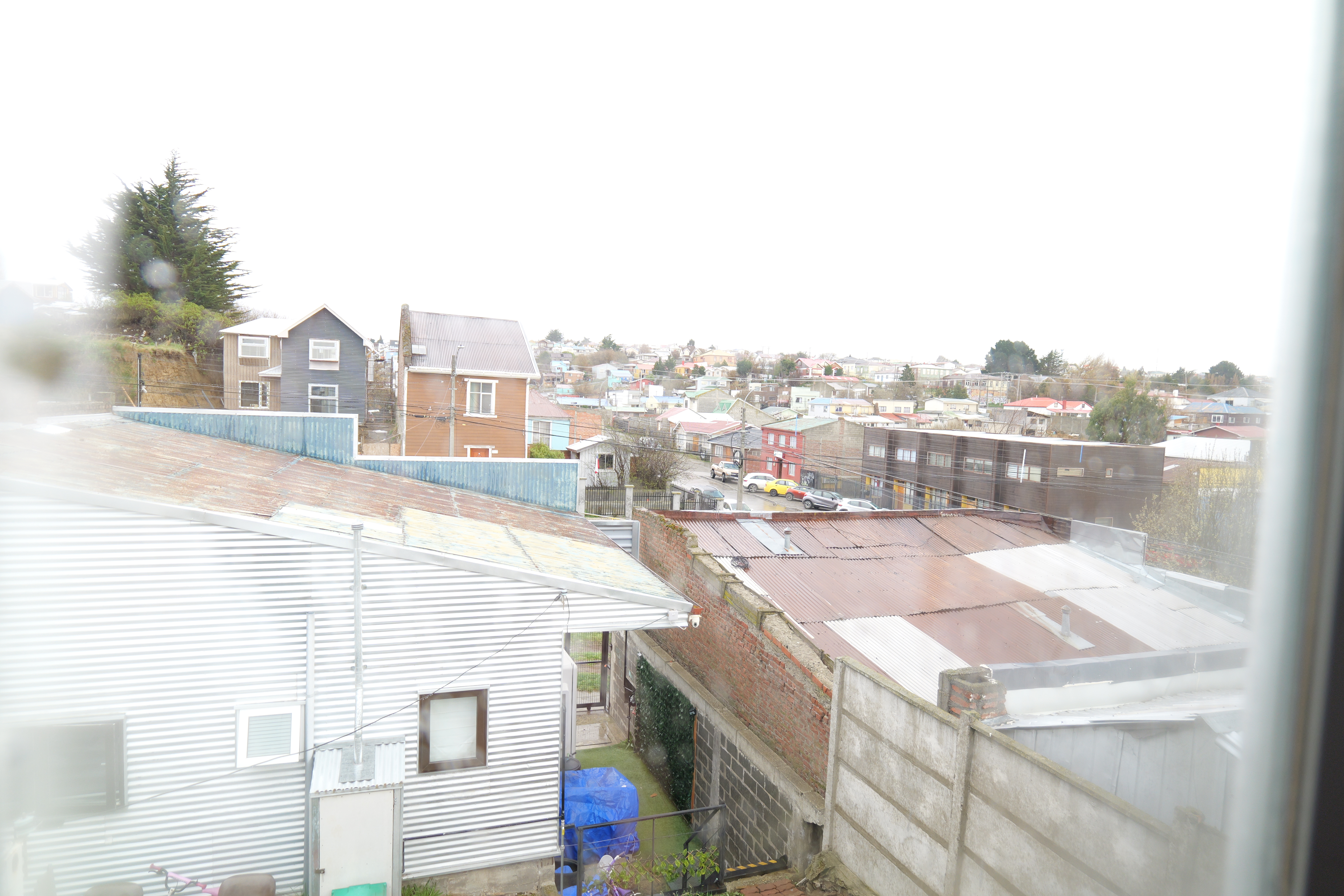
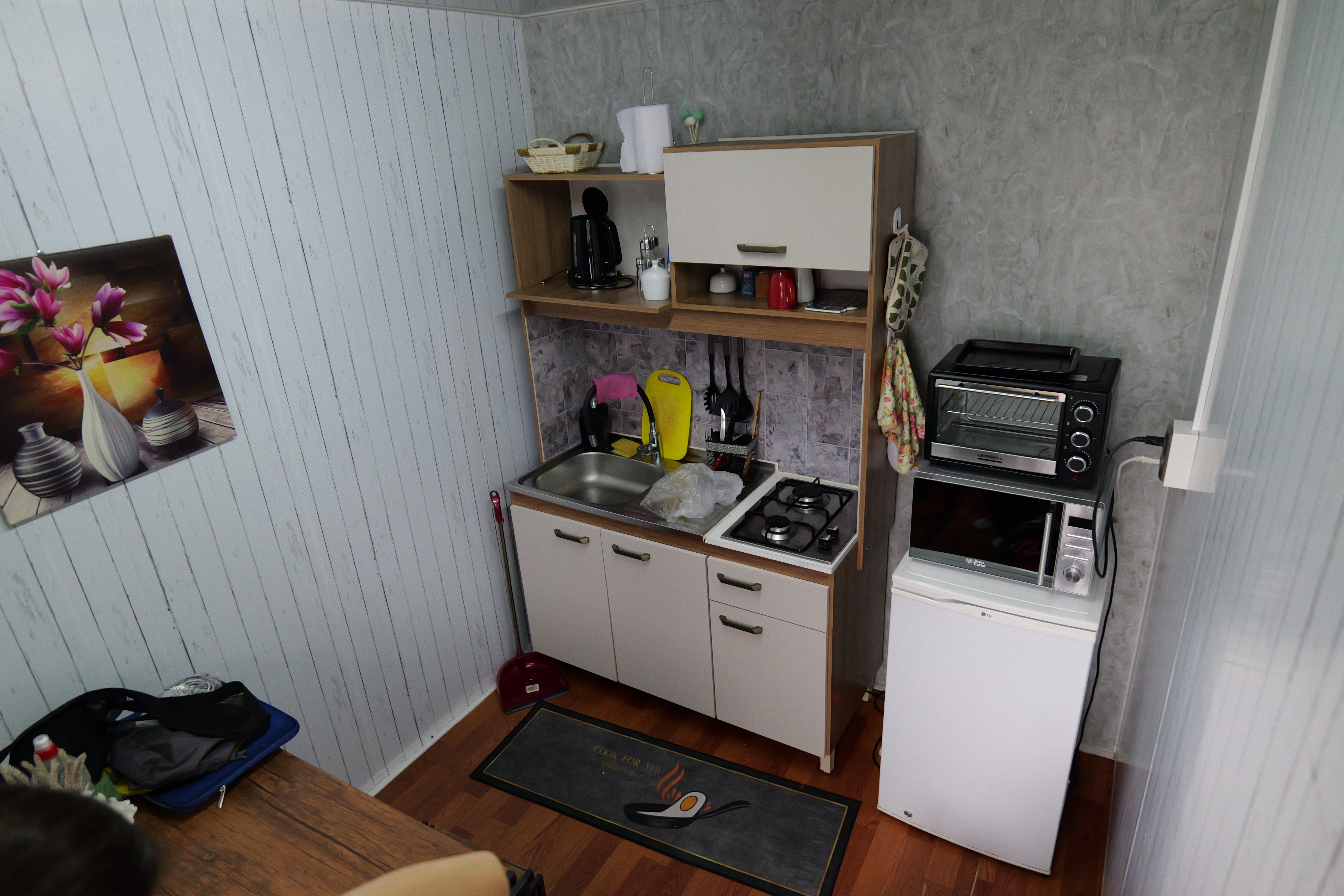
We stayed in shipping container-turned tiny home in someone’s backyard. There were two or three of them, and ours was ontop of the other two, so we had a nice view of the city and the port. From our shower window, we could see different cargo ships and even a submarine.
The first couple of days in Punta Arenas were actually a bit challening because it was the national holiday, so many shops, including grocery stores, some cafes, and even some restaurants were closed. Upon arrival we were able to find at least one restaurant that was open. It was the 18th, which is Chile’s actual independance day, so even a lot of the restaurants were not open. Our waitress informed us that all shops were closed today (a Thursday), and that probably the next day and even Saturday most would be closed. Then, she said, it would be Sunday, so it could be until Monday before things would be open. That’s not great we thought. Our plan was to spend the week mostly cooking for ourselves, so the stores being closed for the next three to four days would be a bit problematic.
Thankfully, on our way back from the restaurant, we saw a frutaria open. Hooray! Frutarias are shops that generally sell fruits and vegetables, but this one also had eggs and other products. We were able to purchase food for a couple of days at least, with hopes that our waitress was wrong and the grocery stores would be open on Saturday. Another win for us - that turned out to be true.
One of the benefits to being in town for the 18th was that the entire weekend there were different activations happening in the town. We went for a run in the town’s largest park, where we were able to enjoy the various mountain biking trails. Our run ended with some traditional Chilean food from the 18th of September festival right in the park. We later stopped by a fish market where we purchased Antarctic salmon, which is actually arctic char. It was incredibly fresh and so delicious - we ended up buying it twice.
The unfortunate part of arriving mid-september in Punta Arenas was that there were many things that weren’t yet open. We went to a nearby conservation area to do some trail running, only to find out that only two of their trails were open. One of the most popular tourist attractions in the area is to go to the Magallanes islands where you can see and actually walk alongside the penguins that live there. I was dying to do this, but unfortunately the boats that go to the islands only operate starting in October, and only if the weather permits. We’ll have to save the penguins for our next patagonian adventure.
Being so far south and right along the water, sometimes Punta Arenas (and Patagonia, in general) recieves really strong winds. We got a taste of this one day, when and incredible antarctic wind blew through. I was sitting leaning against the wall of our tiny, shipping container home and I could feel the wind pushing against my back. Thankfully the wind didn’t last too long.
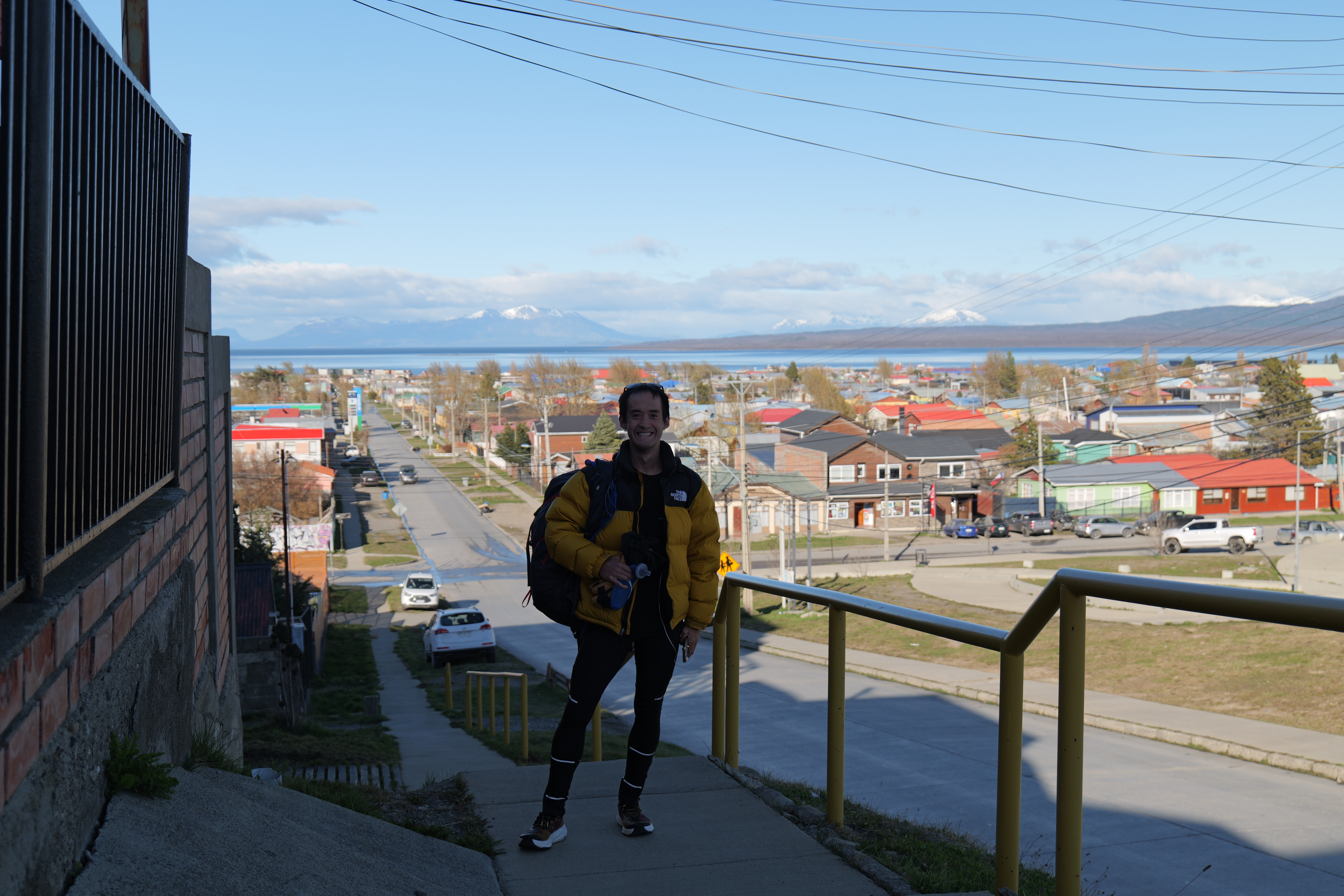
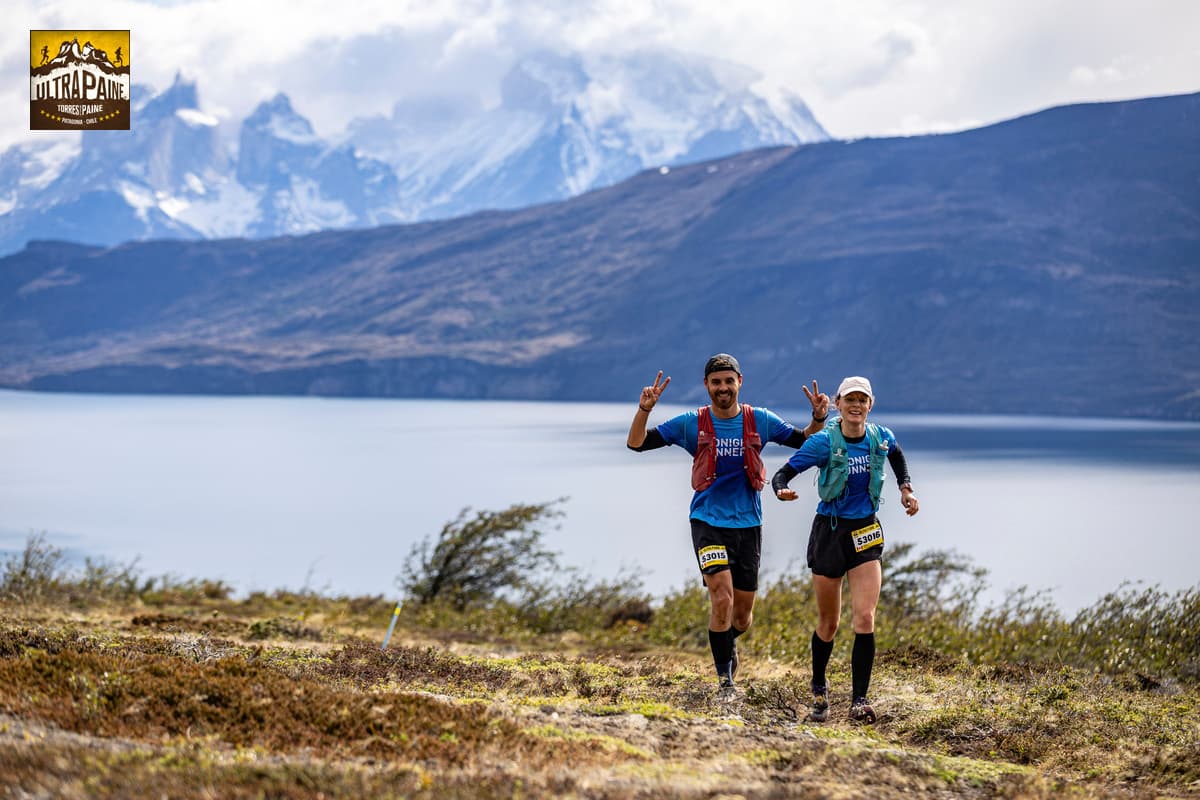
After one week relaxing in Punta Arenas, it was time to take a bus three hours north to Puerto Natales, where we would be meeting our friend Patrick who was flying in to visit us from France. There, we would be doing a 50km trail race called the Ultra Paine, in the Torres del Paine National Park. The Torres del Paine is the most famous hiking place in all of Chile and is very beautiful. Patrick arrived the next day after more than 36 hours of travel. It had been nearly a full year since we had seen him last, so it was great to be reunited. We did a shake-out run down to pick up our race kits, enjoyed the sunny but chilly weather, and went shopping for pre-race dinner ingredients and race morning breakfast food. We didn’t stay up late that night, because we had to be at the shuttle bus for 5:50 the next morning to take us to the race start.
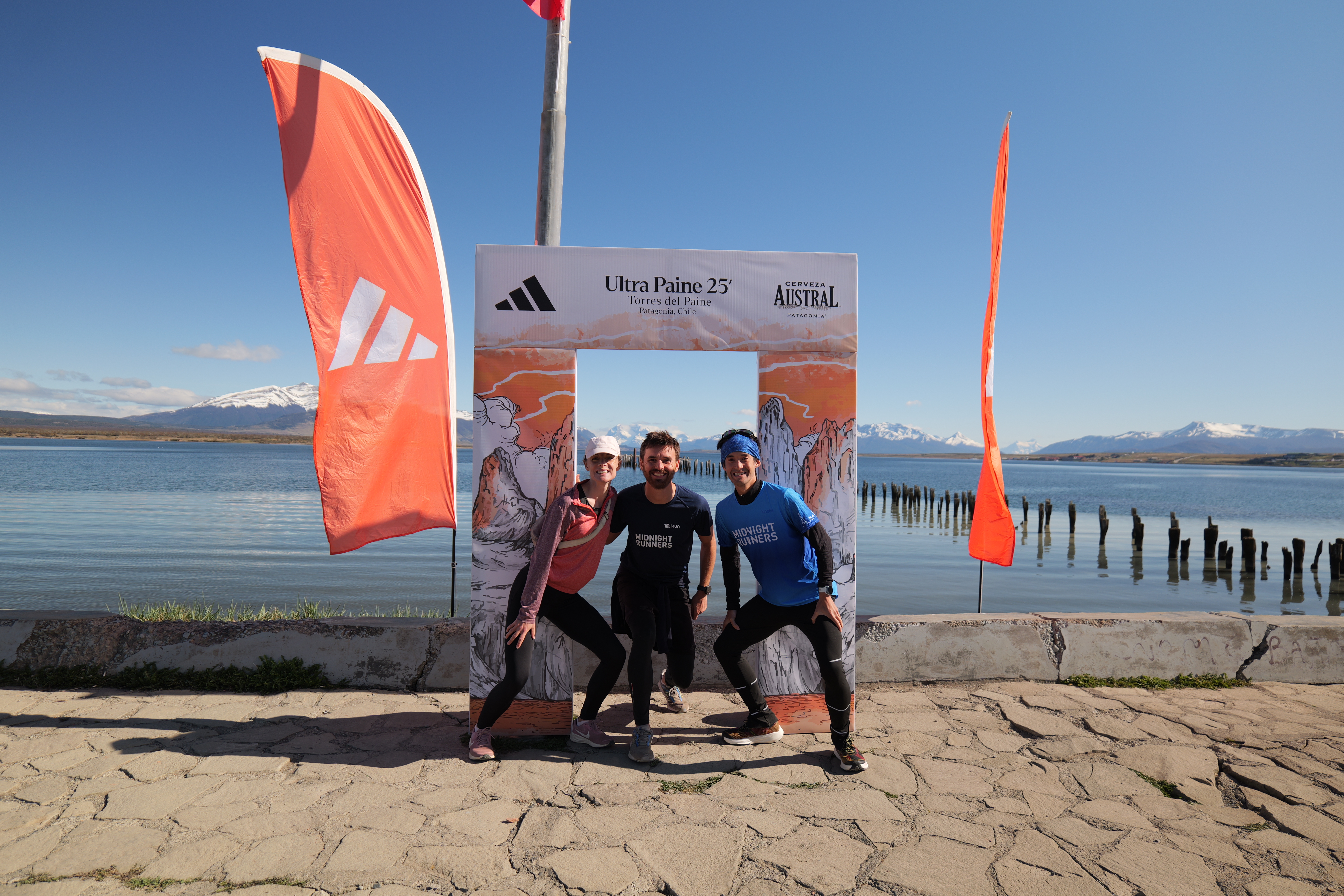
Race morning arrived, and not unlike us, we found ourselves having to run from our accomodation to the pick-up spot. It was about two kilometers away, and there we were, running through the streets of Puerto Natales at 5:30am hoping not to miss the bus. We arrived just on time. By the time we arrived at the start line area, the sun had come up. We did our warmups to be ready for the 8am start, then bang off we went.
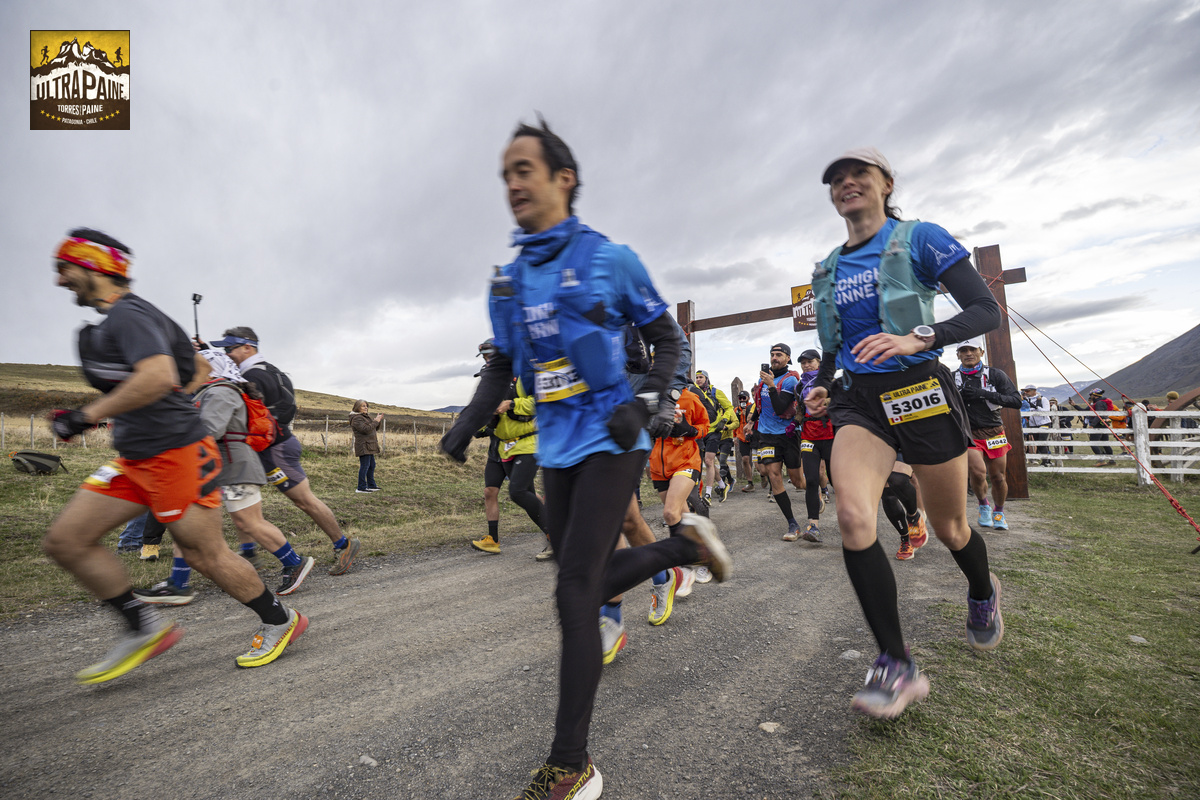
This is the shortest race Jo and I have done in a while, and the first 15 or so kilometers was actually quite flat, meaning that the group went out much faster than we were used to. Not having done much speedwork, I knew that the pace we were running at would come back to bite me later in the race, but I just shrugged it off and told myself that was a later Julie problem. It was fun to be out running again with Patrick, and the course itself, though flat for the moment, had its tricky parts. Mainly, there were many cow gates that we had to climb and jump over along the way. I don’t know why they couldn’t have opened them for the runners to go through and then closed them again after, but hey - it added a fun, challenging element to the first part of the route. The course was beautiful, not too technical, and around the 35km mark had some stunning views of the Torres del Paine themselves. It was incredibly well organized with aid stations about every 10km and a well-marked route, making getting lost difficult.
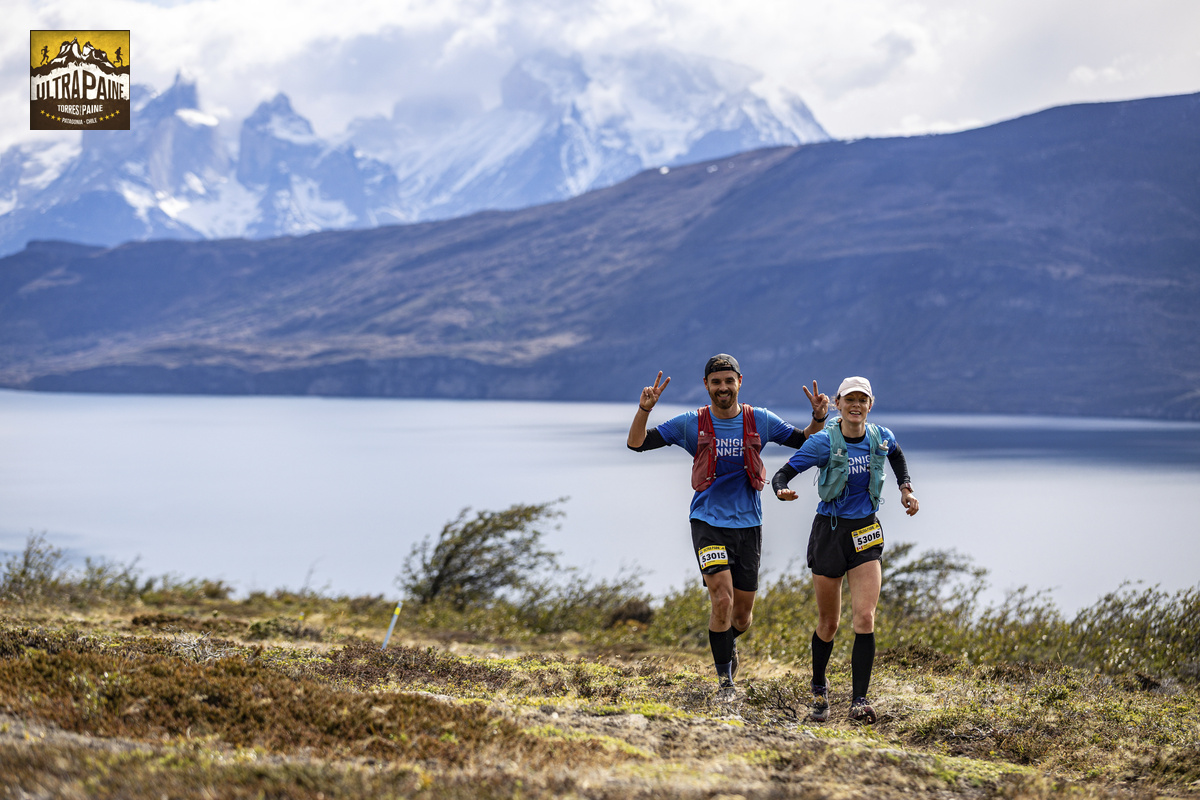
I was running well and was the second woman - but as predicted, my fast pace in the first part did eventually catch up with me. From sometime after 35km until about the 45km mark, I hit “the wall” fairly hard. My calves were cramping up and my legs simply didn’t want to move anymore. My pace dropped significantly, and eventually the third place woman caught up and passed me. Patrick, suffering from jetlag and the long trip, also hit his only wall falling behind Jo and I around 30km. Just before the last aid station at 42km, however, Jo’s legs cramped up big time. He told me to go on, as he was going to spend more time at the aid station trying to get his leg muscles to calm down. I continued on, and within a kilometer or so, Patrick, who had found a second wind, had caught back up with me. Thankfully not long after that I, too, had a second wind, and together we tackled to last descent to the finish line. I did my best to focus on my race and to run the downhill as best as I could, but I couldn’t help but worry about Jo.
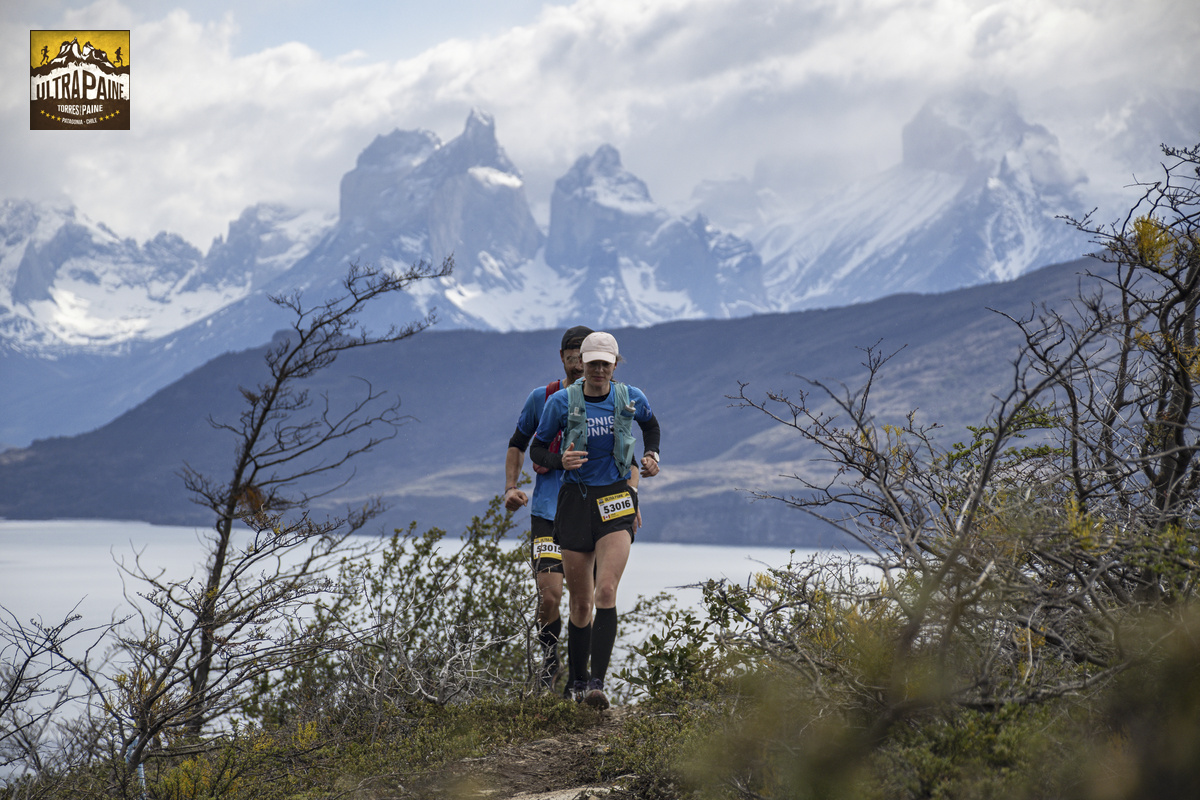
Soon, from a little ways up the mountain still, we could hear the finish line, and not long after that it was in sight. In classic trail race fashion, however, my watch signalled 50km, and then 51km, and while I could see where the finish line was, we still had not yet arrived. Finally, after a loop that I couldn’t figure out why it was necessary, we had the final sprint into the finish. The final race distance was 52km, and I finished only about 10 minutes behind the second woman. The race organizers wanted to take finish line photos of the top 3 women, and while I was doing that, Jo came charging across through, having had a second wind of his own and a final sprint-battle with another French runner we’d met out on the course. Jo ended up finishing just five minutes behind Patrick and I - and yes, he beat the other french guy.
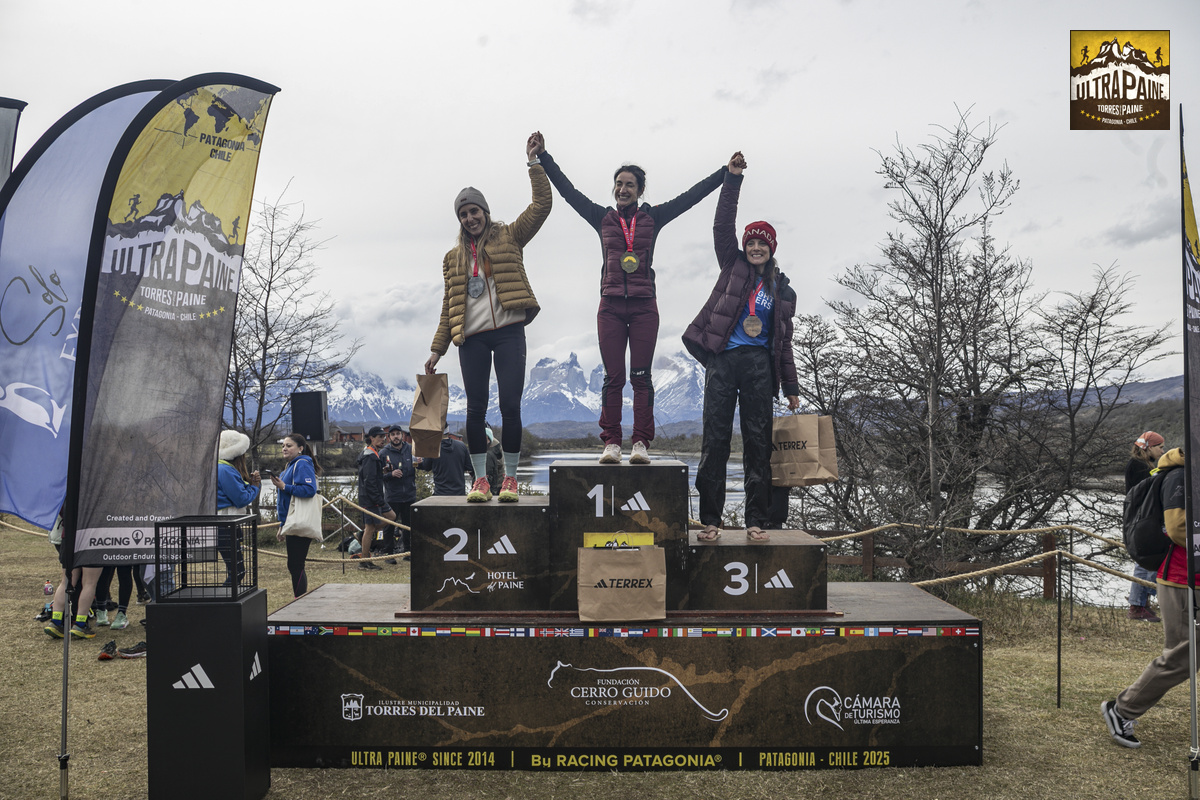
While I definitely wish I could’ve been better trained for the race, I was happy with how it had gone overall. We got extremely lucky with the weather and the course was spectacular. My calves were so cramped up afterward that I could barley walk, but it was a small price to pay. While they were still sore the next day, I am happy to report that I could, in fact, walk.
Though we got some amazing views of the Torres Del Paine from the race course, we wanted to have a chance to see them again but more up-close and actually stop to admire them. For this, we went to Torres Del Paine National Park to do the Base Torres trek. This is a trek that you can easily do in one day, where you hike to the base of the torres and then come back down. If you want, you can take some side trails, as well, to see some of the lagoons and other sites that the park boasts.
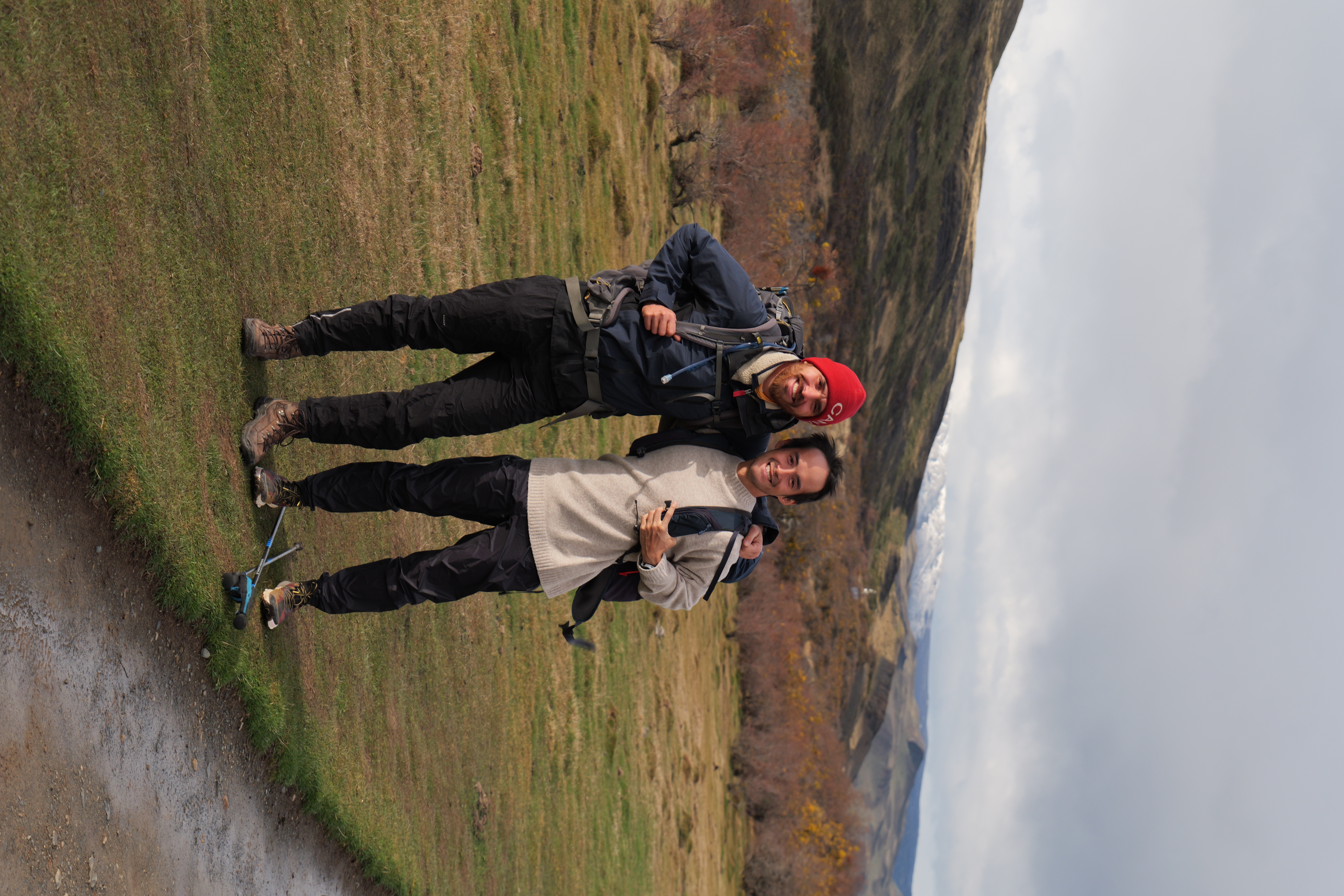
Our hike started out mixed - sunny, but with some rainy moments. Overall, fairly good. We took a couple of side excursions to see some of the lagoons before heading up towards the famous Torres del Paine. It gets its name from the three massive rock towers that just straight up towards the sky. At the base, there is a beautiful turquoise-blue lagoon. The hike to get there is also stunning, and not too challenging. Still, a certain level of base fitness is required, as it is mostly uphill on the way to the base and then you have to come back down.
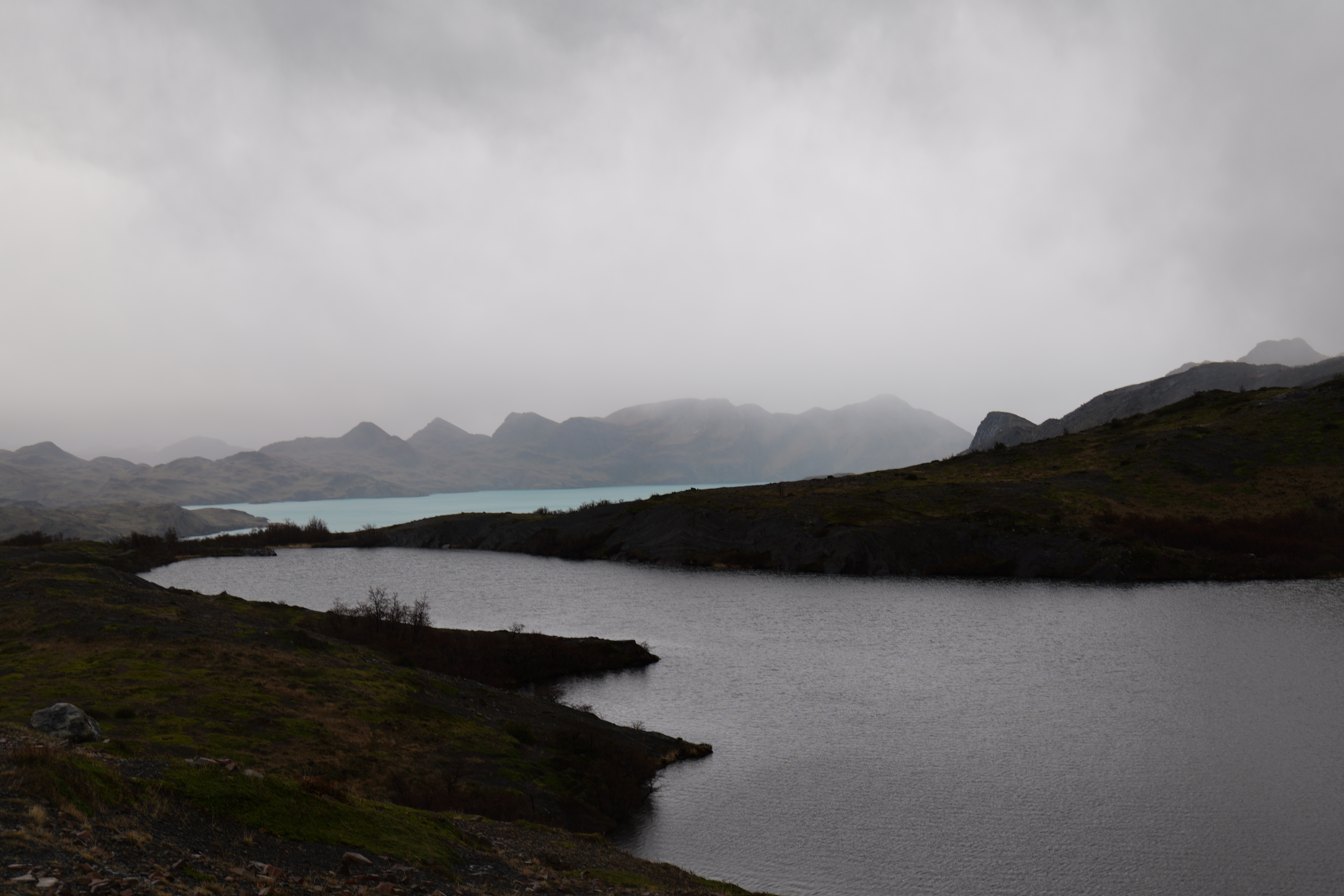
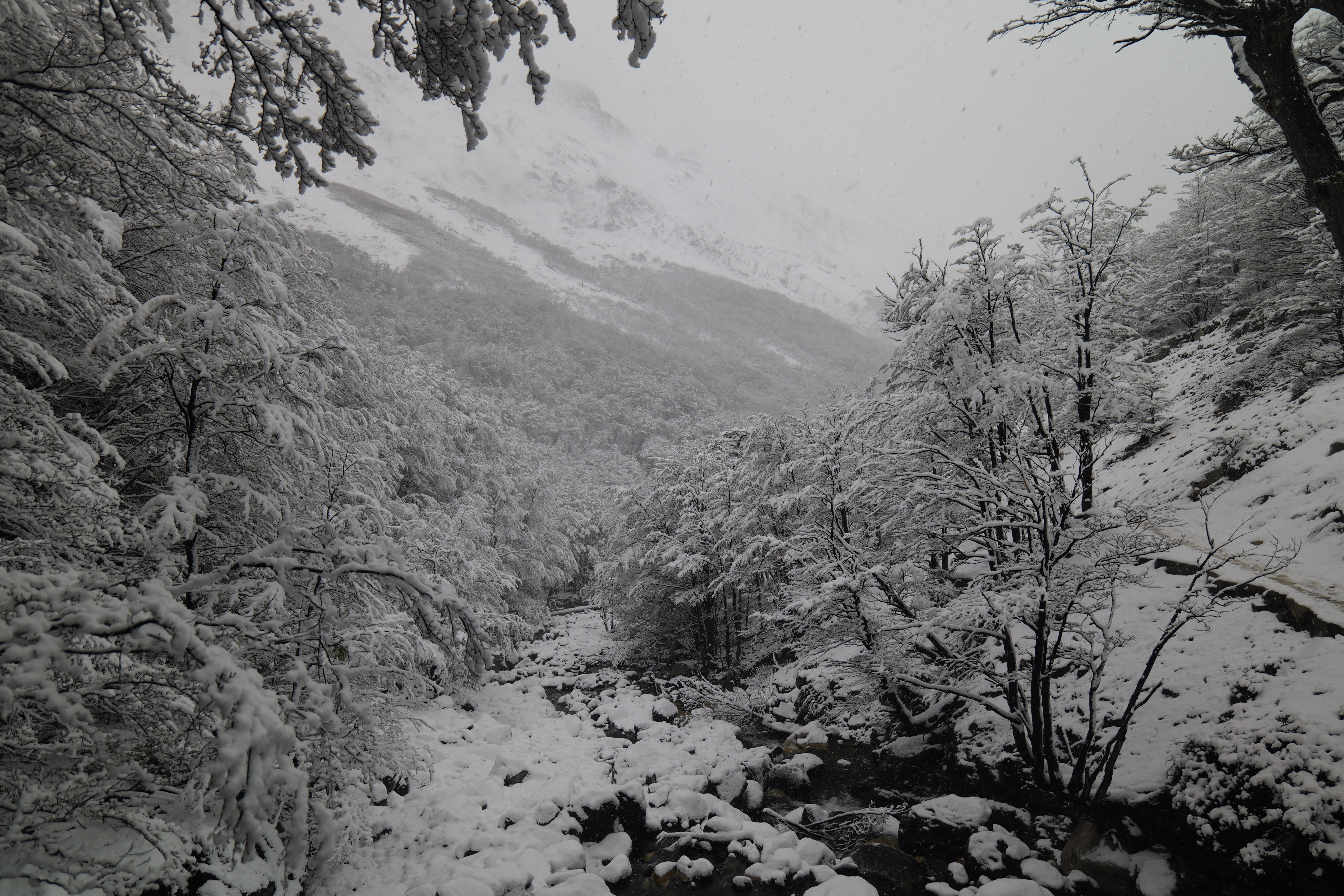
As we were hiking, however, the weather started to change. The weather in early October in the South of Chile is kind of like the weather in Ontario in March - unpredictable, and you’re still likely to get a few snow storms. That is exactly what happened to us. It started out innocently enough, with just light snowflakes falling but melting when they reached the ground. As we continued towards the base of the towers, however, the snowfall became heavier. Before we knew it, we were in a full-on winter wonderland.
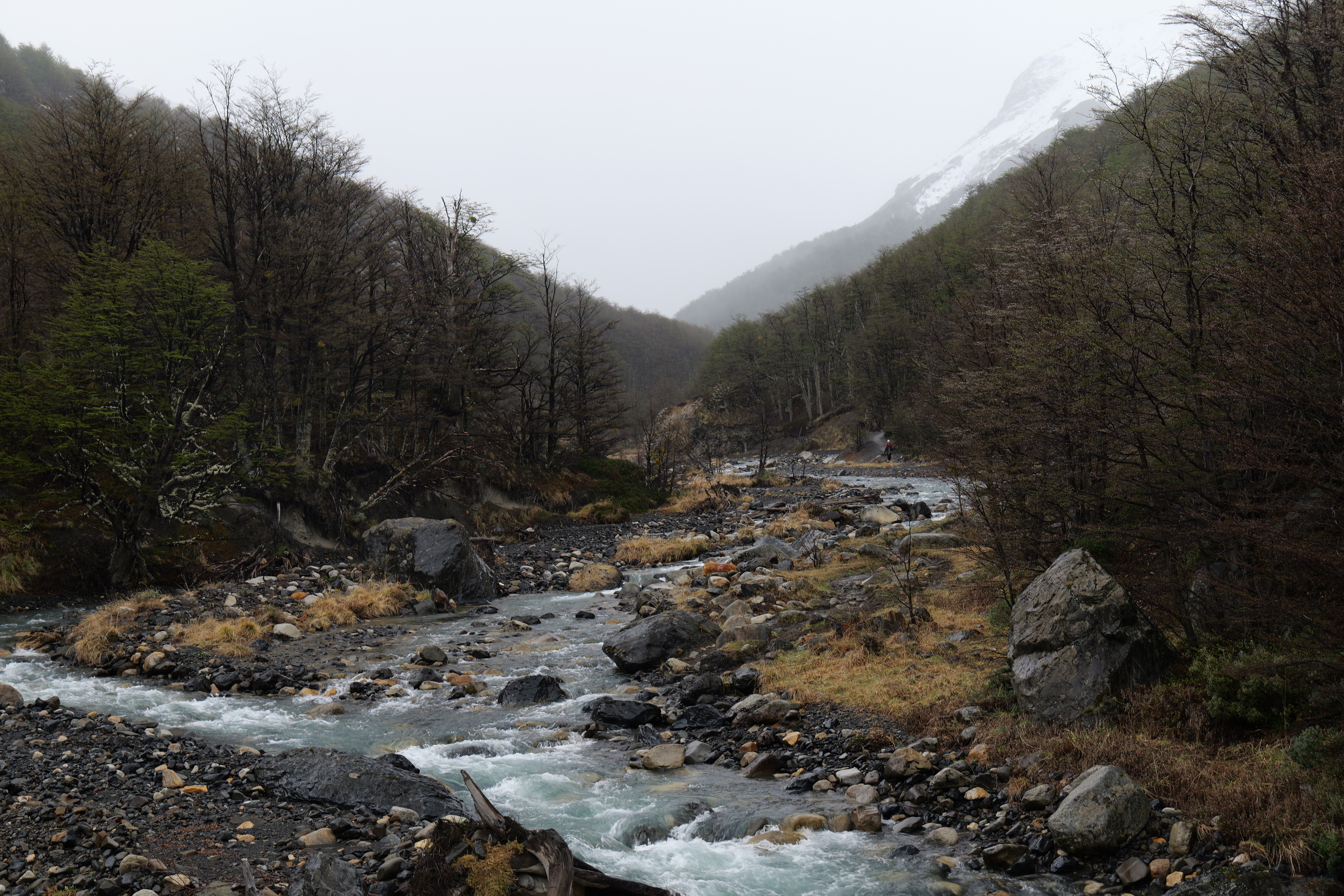
It was actually really fun to walk and play in the snow. As we were reaching the final climb to the base lagoon, however, we realized that the weather was getting more intense, and that it was probably a wise idea to turn back. The Torres were covered in clouds anyways, so we wouldn’t be able to see them. With that, we hiked back down, out of winter and back into a rainy spring. Thankfully, we’d planned ahead and had some dry clothes to put on for the ride back to Puerto Natales.
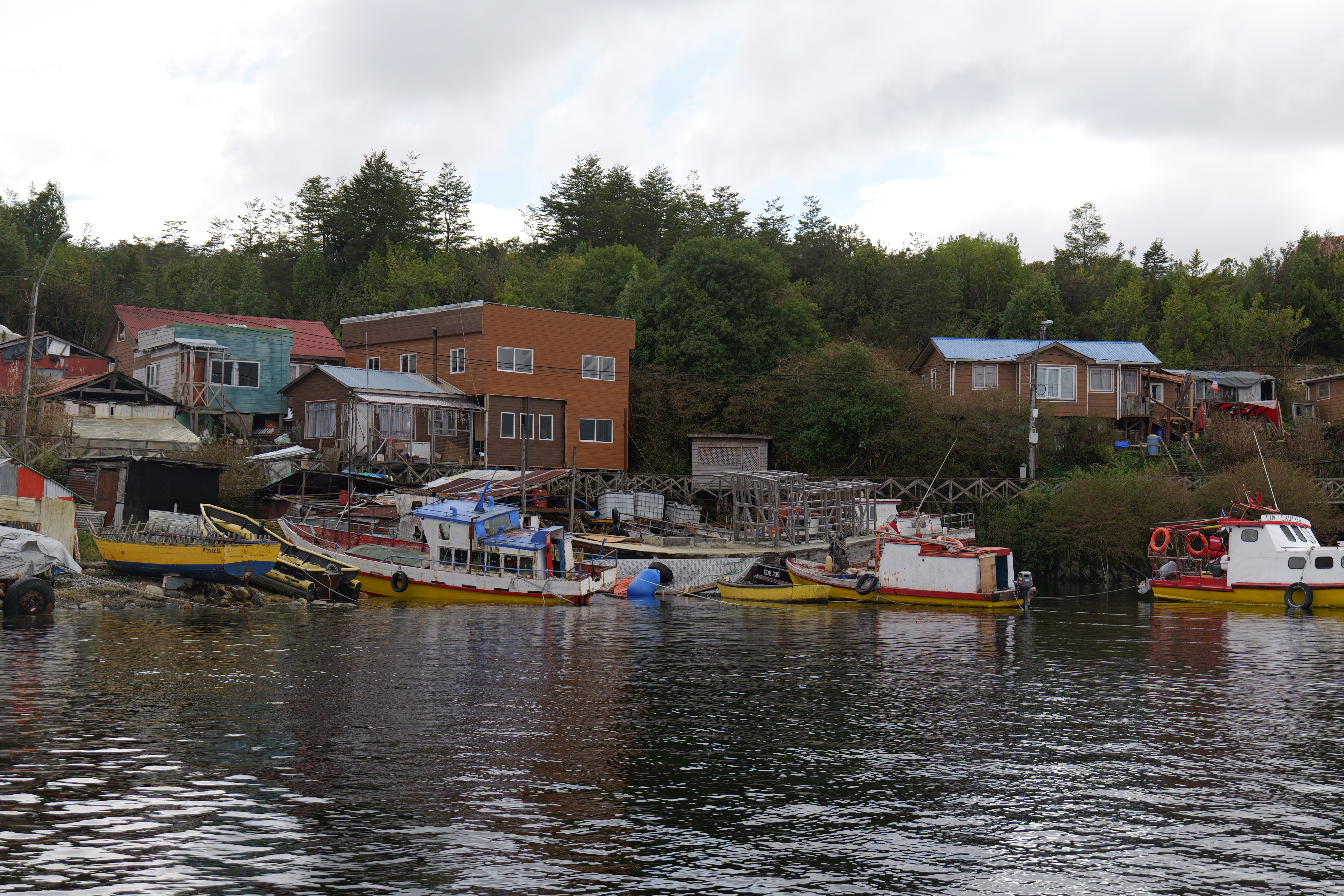
We took it easy the next day, before preparing for the next adventure: A trip up the carretera Austral, or the Austral Route. This is a famous route that goes all the way up through Chilean Patagonia until Coyhaique. The first part is done by ferry, and then after that bus or car. We were taking what was supposed to be a two-night, three-day ferry from Puerto Natales to a tiny town called Tortel, with one stop in another Patagonian town, Puerto Eden. Puerto Eden is special, as there are no roads at all that lead into the town or even in the town itself. All walkways are constructed boardwalks, as the amount of water and rainfall in the area makes building roads futile.
The ferry is by no means a luxury cruise, but it is an interesting way to travel. There are no rooms or beds; the seats are all similar to those you would find in a bus, ones that you can recline up to 160 degrees for sleeping. They serves 3 meals a day, with generally unlimited coffee and tea. The lunches and dinners weren’t bad, though if you wanted more vegetables you would’ve had to have asked for the vegetarian menu at the beginning of the trip. The breakfasts, however, left little to be desired. It was a ham and chese sandwich on dry, industrial, white sandwhich bread. The cheese and ham I’m sure also wouldn’t pass for consumamble in France. Usually two mini-muffin/cupcakes were provided along with some juice. We had packed some of our own snacks and things to supplement, but it didn’t do much to make up for the fairly unappetizing breakfast.
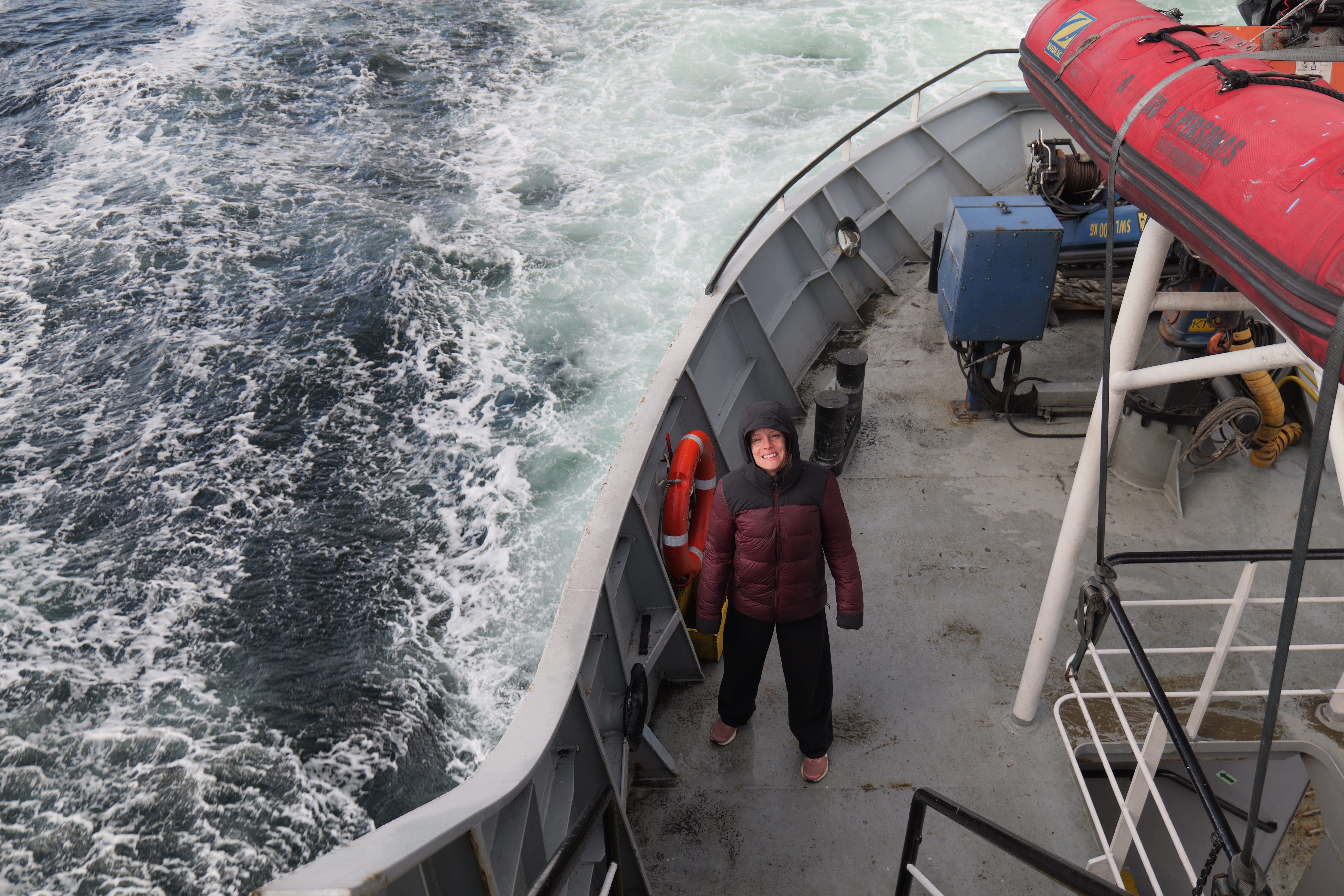
On the first day it rained quite a lot, but when it wasn’t raining, we enjoyed going out on the decks to take in the views. Again, the famous Patagonian winds had picked up, and the first time we went out onto the upper decks it was so windy I thought at least one of us would be blown overboard. I think the captain probably thought we were crazy for even going outside in the first place. Jo and I first went to the front of the boat on the lower deck, but we didn’t stay there for long. The high winds and therefore bigger waves meant we got hard-core splashed almost immediately. We laughed it off and rushed to higher ground, only to be met with even higher winds. After that, we decided to wait until the winds died down before going out again.
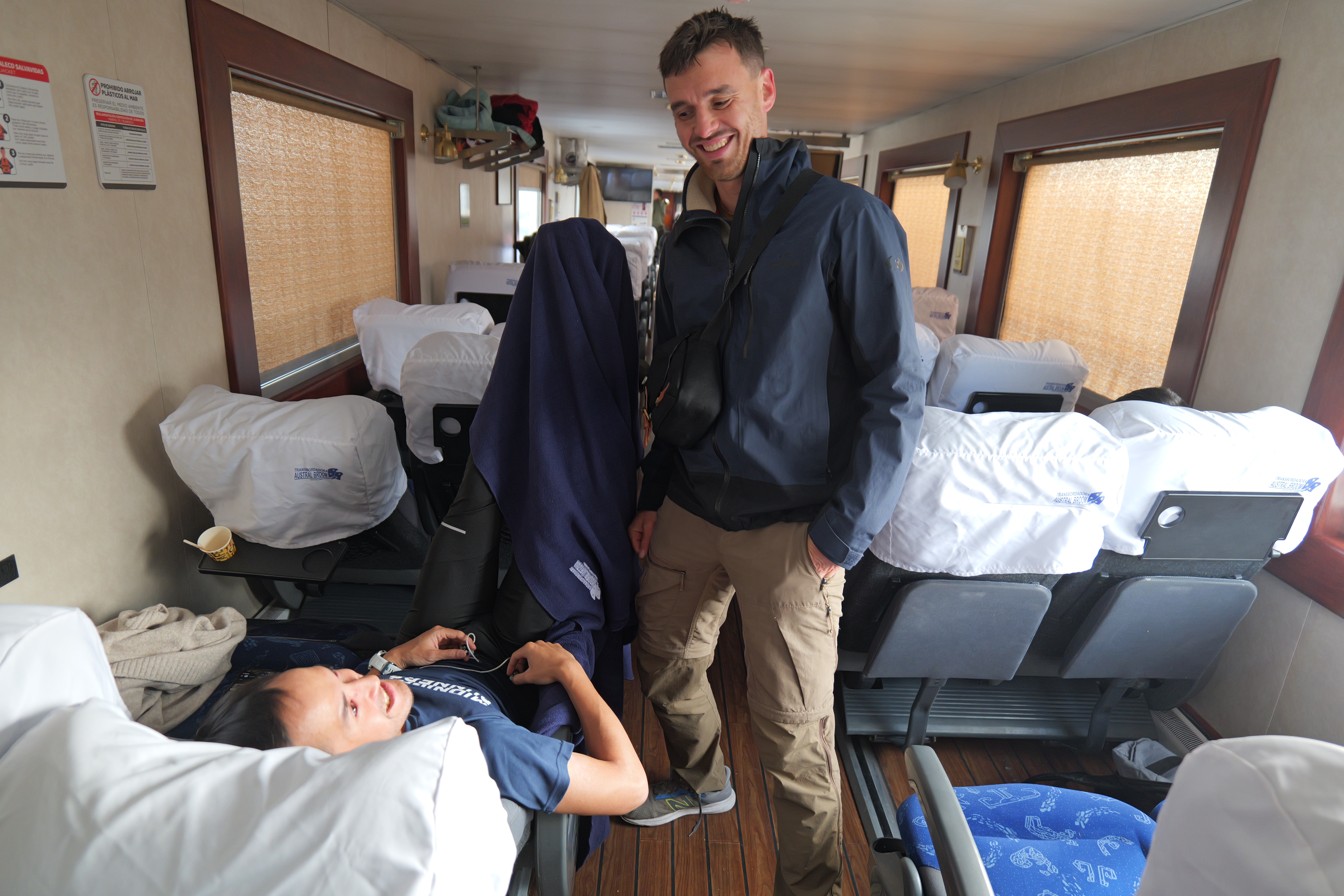
The weather for the first part of the trip was pretty abysmal, and not only did this mean that we didn’t get the views we hoped for, it also put a snag in our plans: the night before we were supposed to arrive in Puerto Eden, the captain got word that extreme rainfall had destroyed the road part of the Austral route from Tortel all the way to Coyhaique. This meant that there would be no way out of Tortel, and therefore after dropping some things off in Puerto Eden, the boat was ordered to turn around and head back to Puerto Natales. This meant three nights on board the boat, and also meant that we would simply end up back where we started. On top of that, we couldn’t go and explore Puerto Eden like we were originally meant to, because the boat needed to head back as quickly as possible. On the positive side, the weather seemed to improve somewhat, so we actually had sun and got to see some of the views we’d missed on the way there. Also, the boat company offered everyone on board three otions:
- A guaranteed and free spot on the next boat that would be heading to Tortel
- A voucher to travel for free with the company again
- A full refund.
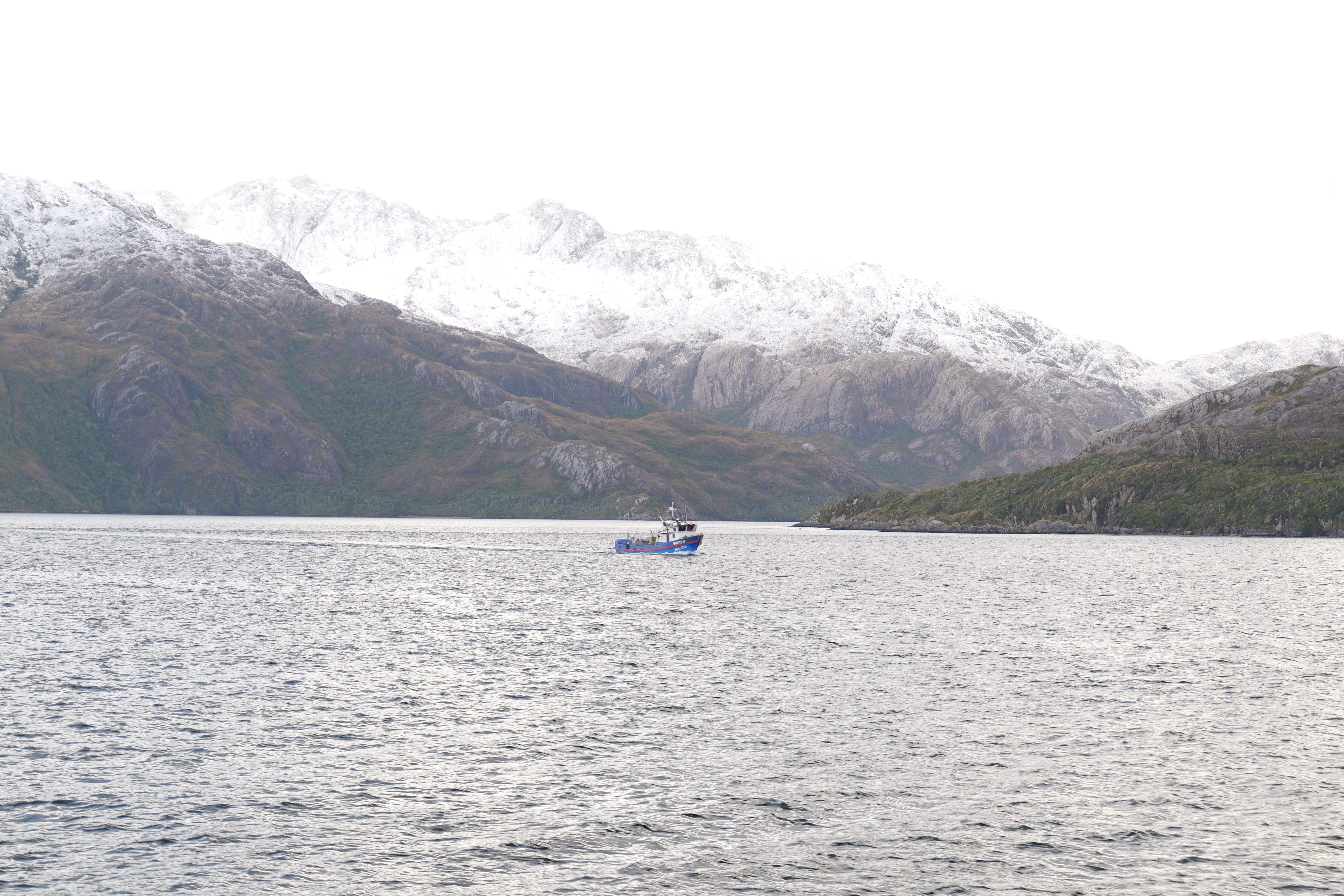
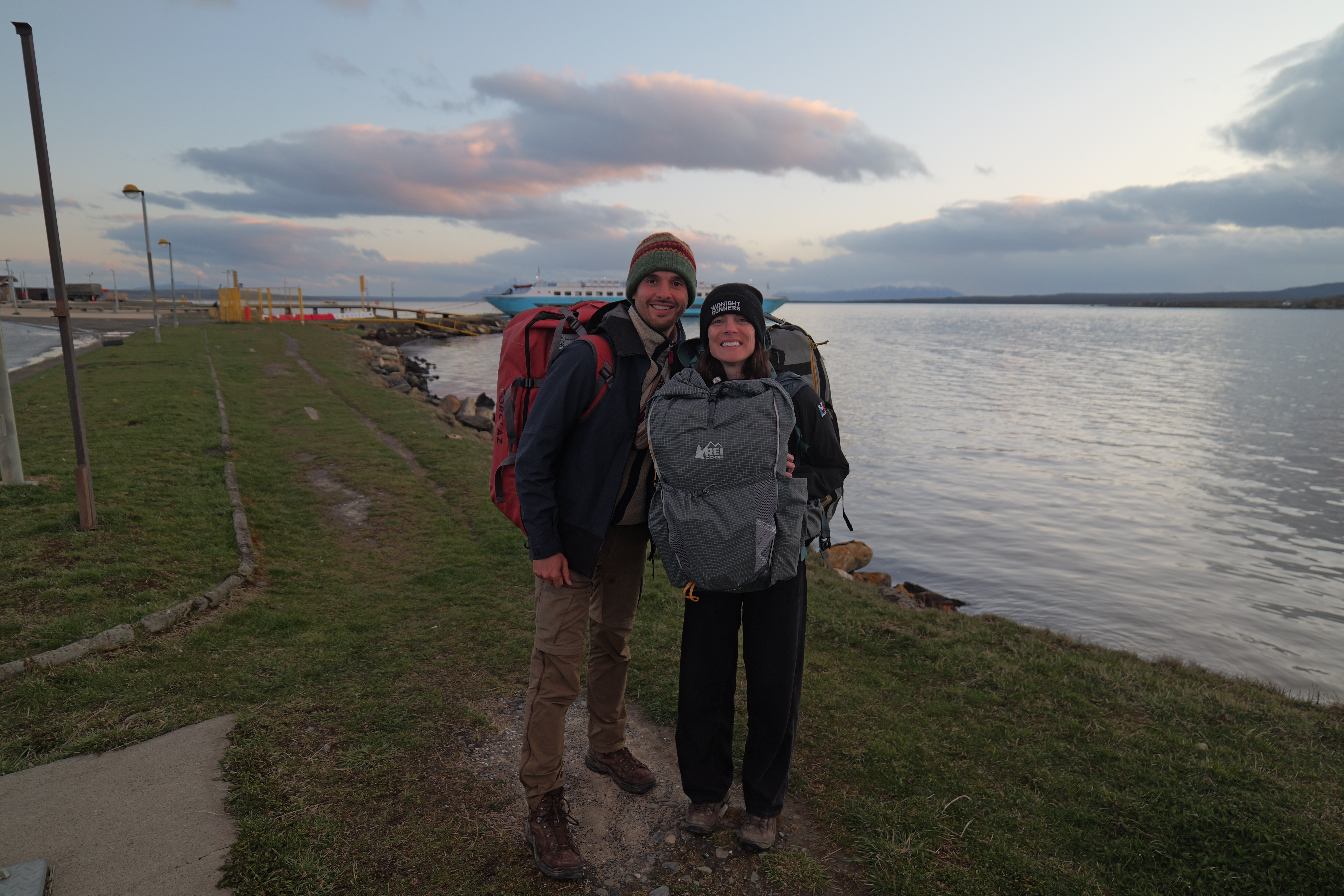
Naturally, knowing we wouldn’t be coming back anytime soon, we took the refund. We were then forced to create a new plan. This plan meant a bus from Puerto Natales in Chile to El Calefate in Argentina, and then from there a flight to another Argetine Patagonian town, Bariloche. We would spend a few days in Bariloche before taking a bus back across the border to the Chilean side of Patagonia. Jo and I were disappointed that we would have to fly yet again, but sometimes mother nature has other plans.
Though disappointed about the Austral Route, I was excited about going to Bariloche. My friends in Argentina all speak very highly of it, and it is actually a fairly popular skiing destination in the winter time. The ski resorts were already closed, but we got busy quickly making some hiking plans. Originally, we wanted to do a trek called Los Cuatro Refugios, or The Four Refuges, were you hike each day and spend each night in the four different mountain refuges along the route. Unfortunately, being still so early in the hiking season, only the first two refuges were open. So we did a two-day hike, with the first day being a fairly long, intense 20+km day with a lot of climbing and descending, and then the second day being an easier, gradual 14km descent back towards the town.
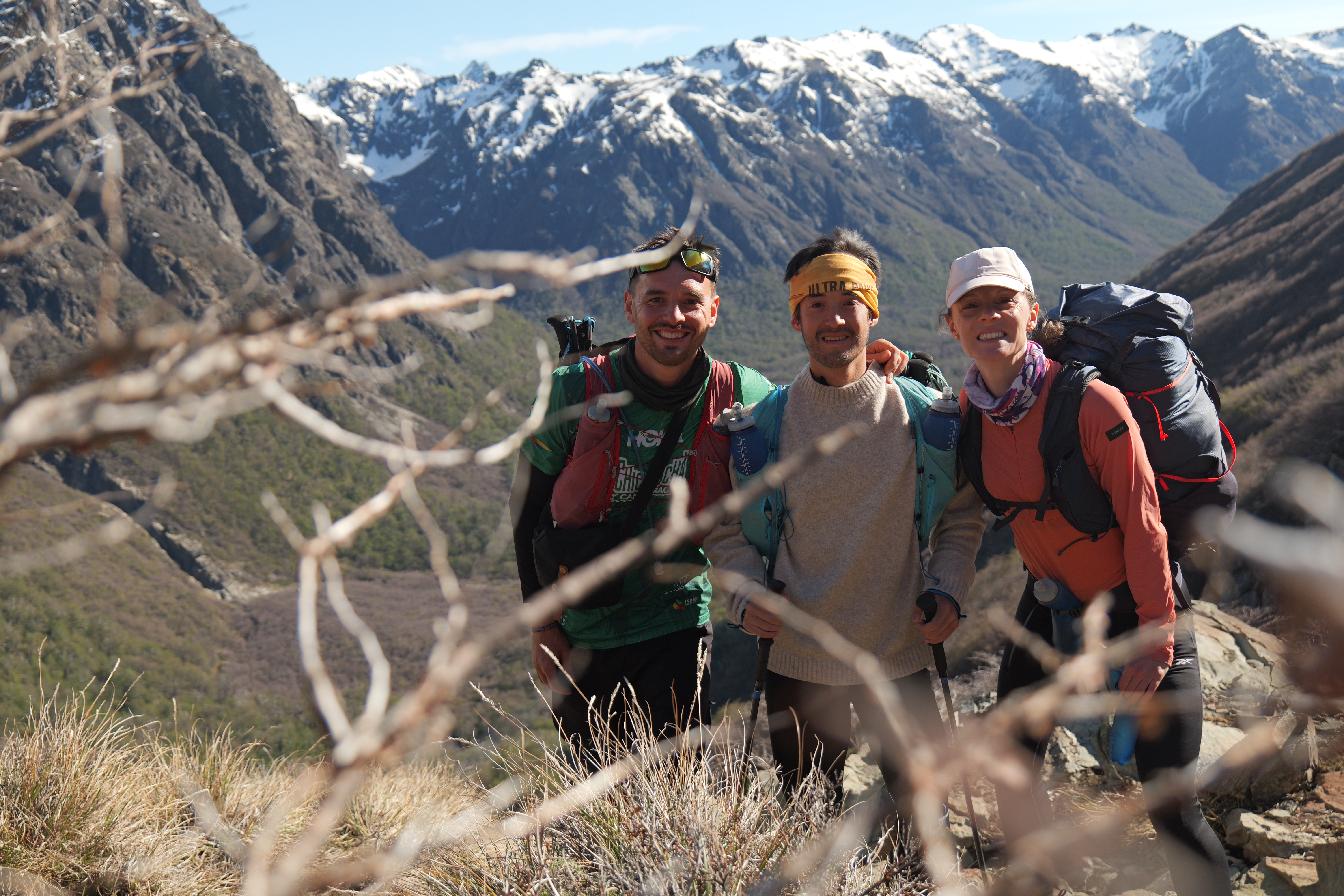
The hike started out wonderfully. We had a sunny day for it, and we hiked the fairly gradual, non-technical first 10km up to the Refugio San Martin. Here, we had lunch, and wow were we impressed! We had a proscuitto and cheese sandwich on crusty, delicious, bread made right there on-site. It was accompanied by an also homemade soup. The refugio itself is also quite beautiful, situated right next to a beautiful lake at the base of mountains that were still covered in snow. Well-fed and feeling positive, we headed off, trekking through the snow, to tackle the next 10km of the day. These 10km would be more challenging than the first. It involved climbing up and down two mountain passes before reaching the Jakob refuge, where we would stay the night.
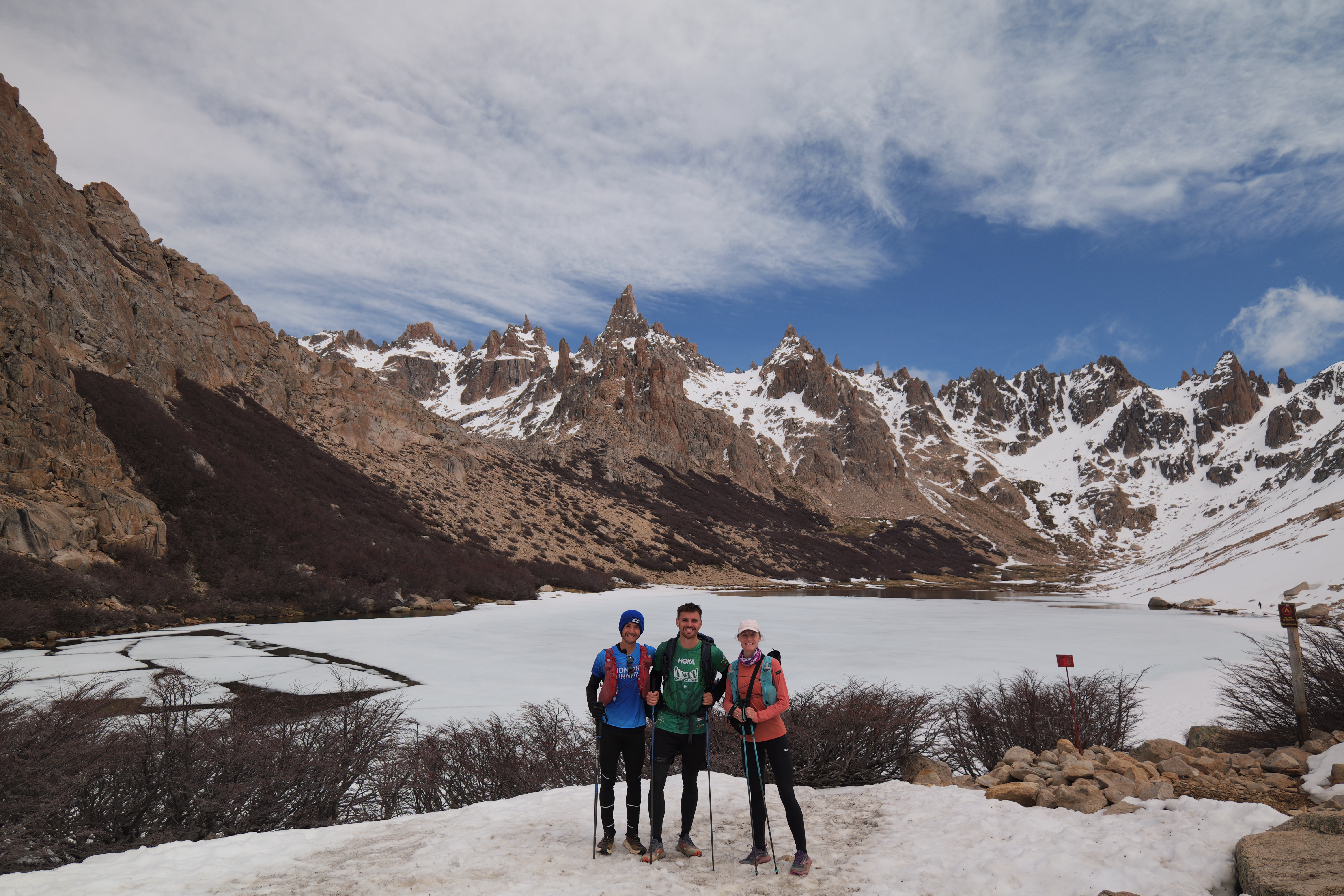
We started the climb up to the first pass, hiking through sometimes knee-deep snow. It was challenging but fun, and we were enjoying the views. We reached a section where there were two options. The first being shorter but steeper, the second being longer but more gradual. We debated for a couple of minutes before deciding to take the shorter, steeper route. Not long after taking this decision we would come to regret it, but once you start climbing up a steep, snow-covered mountain, you can’t really turn back. With no crampons on our shoes, the climb to the pass was nothing short of treacherous. Patrick was in the lead, I went in the middle, and Jo followed behind. The mood shifted from happy and playful to rather quite and tense. We kicked our feet into the icy snow as best we could to try and create footholds. We also had to stow our poles and instead simply use our hands to keep ourselves from slipping. Within seconds of putting my bare hands in the snow, they were so cold they hurt. This, however, was better than not using my hands and slipping down the mountainside into the glacial lake below. We were advancing slowly but steadily, until suddenly one of my feet slipped in the snow and I ended up on my knees instead. This is not good, because you slide much easier on your knees. Jo reacted quickly behind me and pinned me with his body to the side of the mountain. He was pushing me so hard into the snow that I actually had to ask him to ease off a bit, just so that I would have enough room to re-position my feet. I got myself better set and we continued the climb, until we finally made it to the top of the pass. The views were amazing, and we celebrated, relieved to have made it.
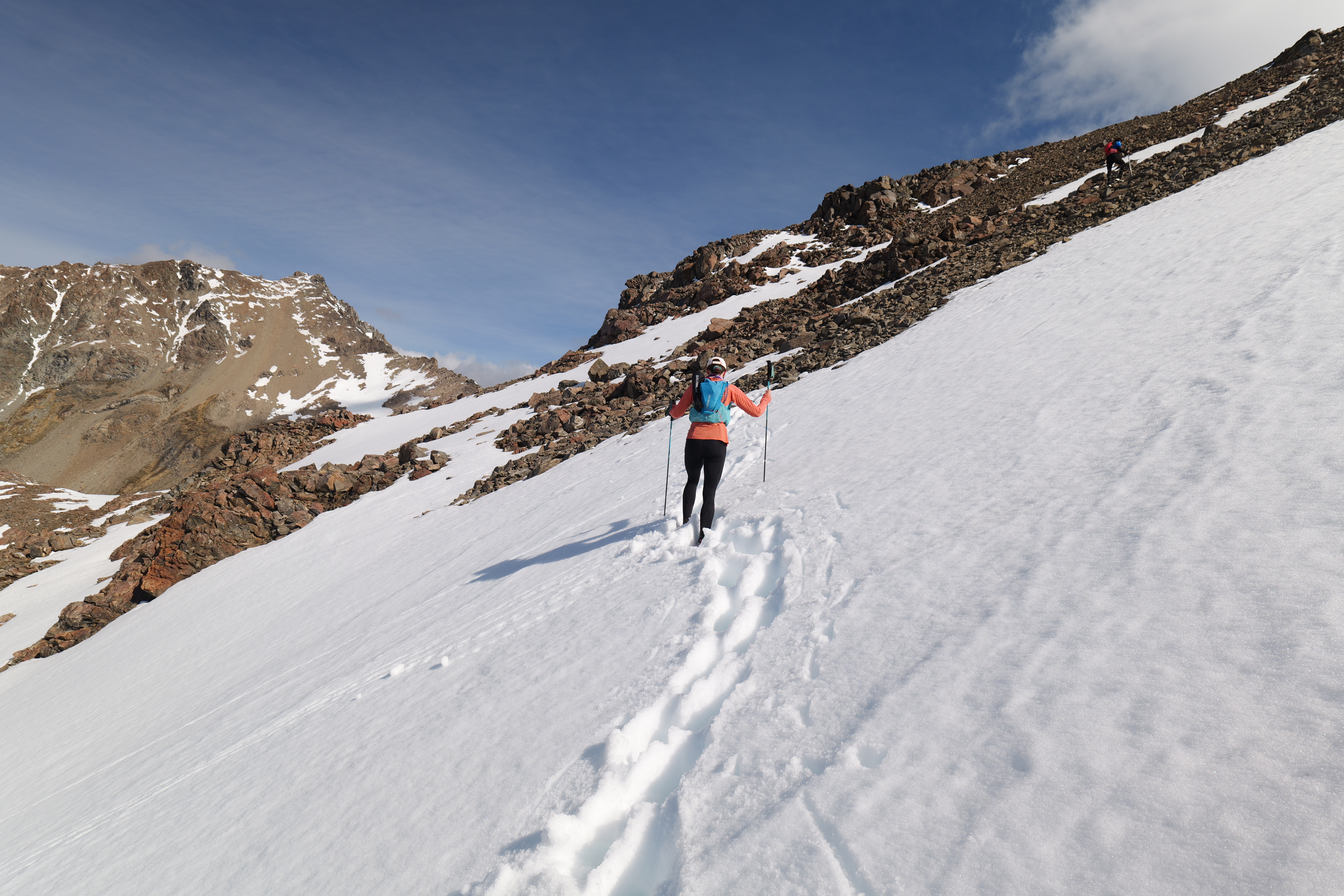
That relief, however, didn’t last long, because we had to start the descent down into the valley below. The first part of that descent wasn’t snow-covered, but it was deep, rocky sand and loose rocks ranging in size from small to medium-large. I struggled to keep myself from panicking as we zig-zagged down the side of the mountain. Patrick went on ahead of us, but Jo stayed with me to help me navigate the mountain and help me not to have a full-blown panic attack.
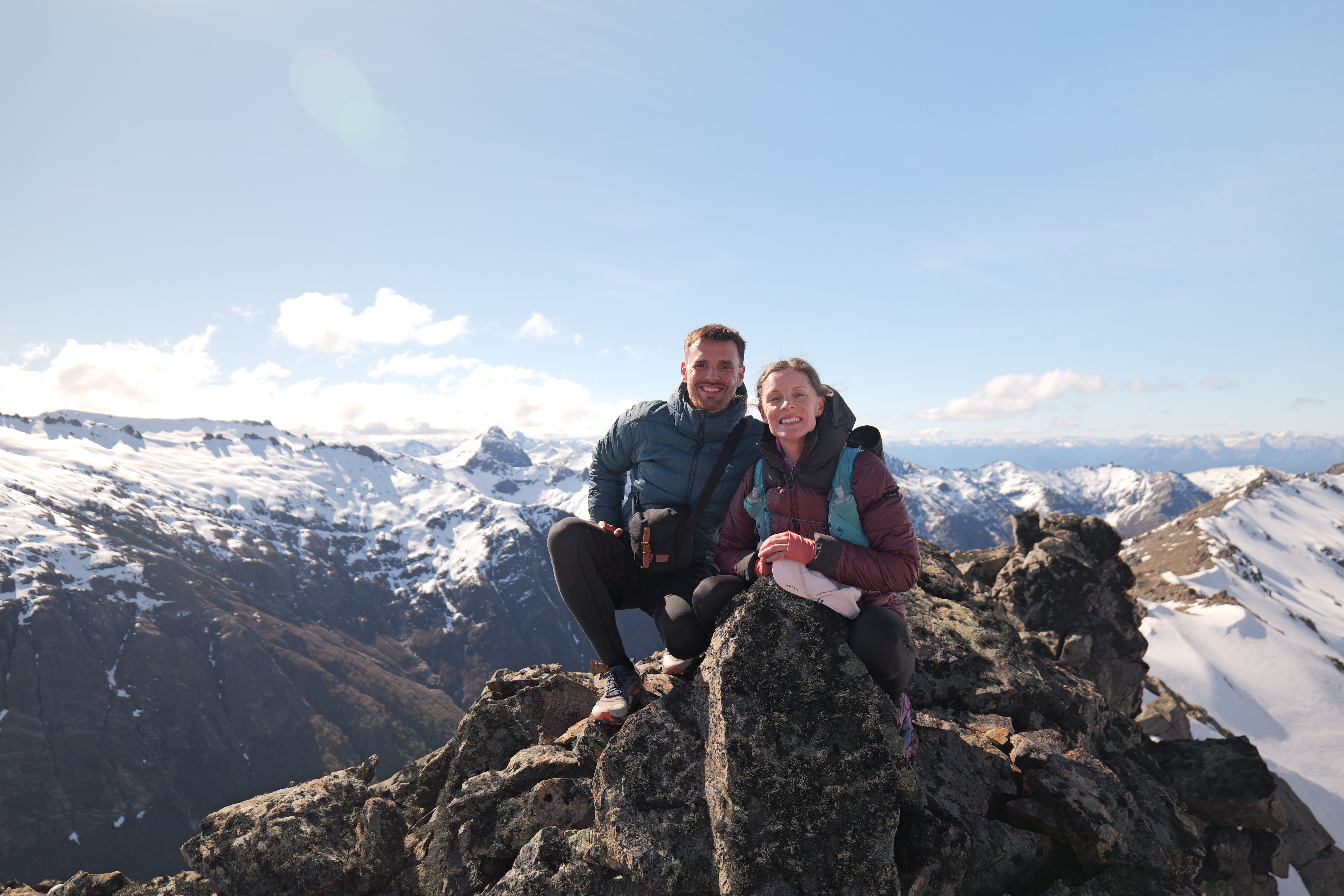
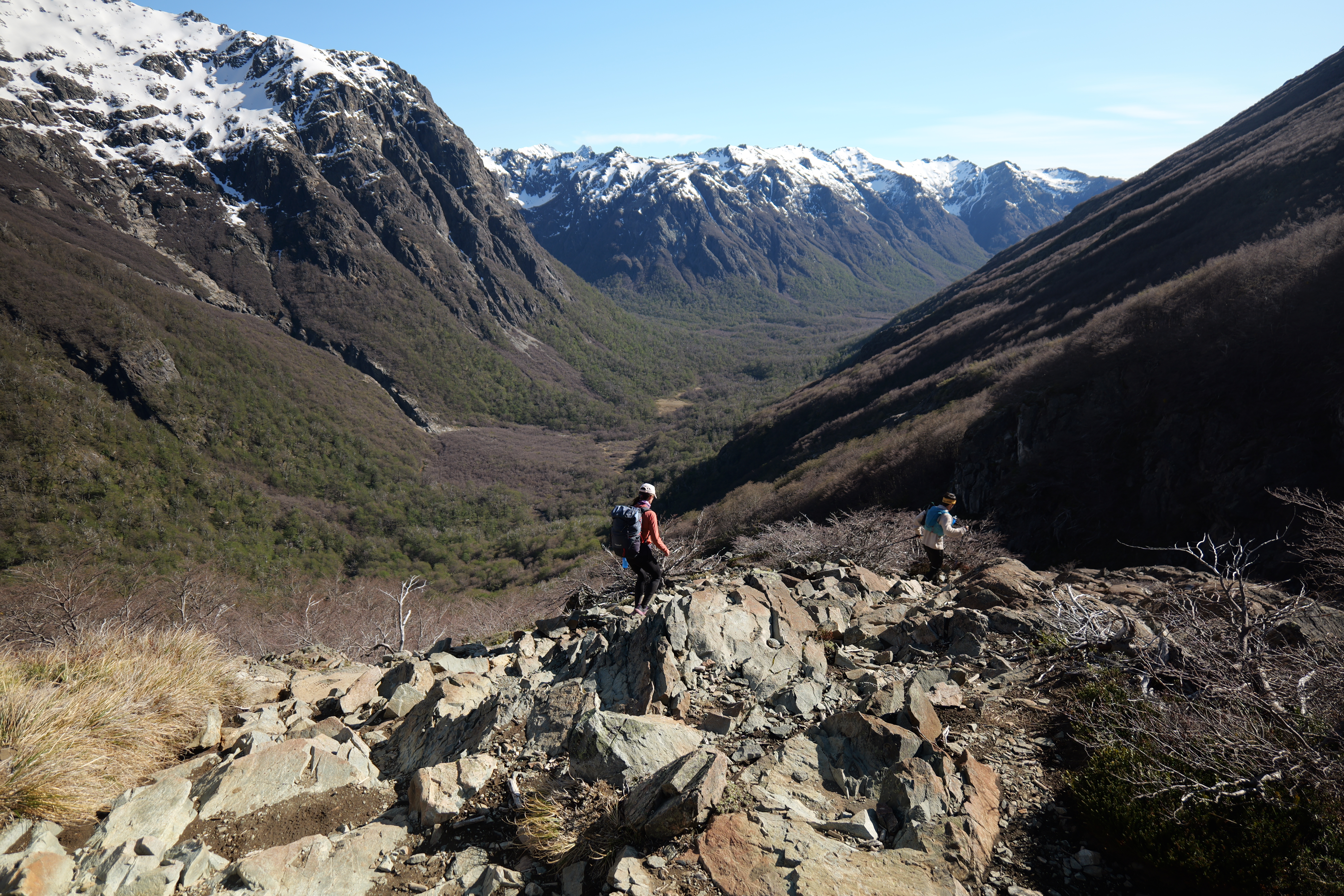
Our shoes full of rocks and sand, we finally made it down. The walk through the valley was a lovely forest trail, which was helpful in calming my nervous system after such an intense climb and descent. Naively, I thought the hardest parts were behind us. Unfortunately, we had another snowy climb to do, followed by a descent even longer and more treacherous than the first. The second snow-covered climb wasn’t actually so bad in comparison to the first. I did my best to play it cool, more for my own sanity than anyone else’s, but I think my nerves were a bit too fried from the first pass. This made the second climb, that really wasn’t nearly as sketchy as the first, feel scarier than it should have. The view from the top of the second pass, however, was incredible. Snow-capped mountains were all around us, and we could see our refuge next to the lake in the valley below. Now, all we had to do was go down.
As I said before, I think my nerves had already taken more than enough for one day, and so this descent, similar in terrain to the first but much longer, for me, was awful. Again, Patrick went ahead at his own pace, but Jo stayed with me to help me work through my fear and get to the bottom safely, This was no easy task, as I was less and less able to manage the panic and anxiety that kept bubbling up.
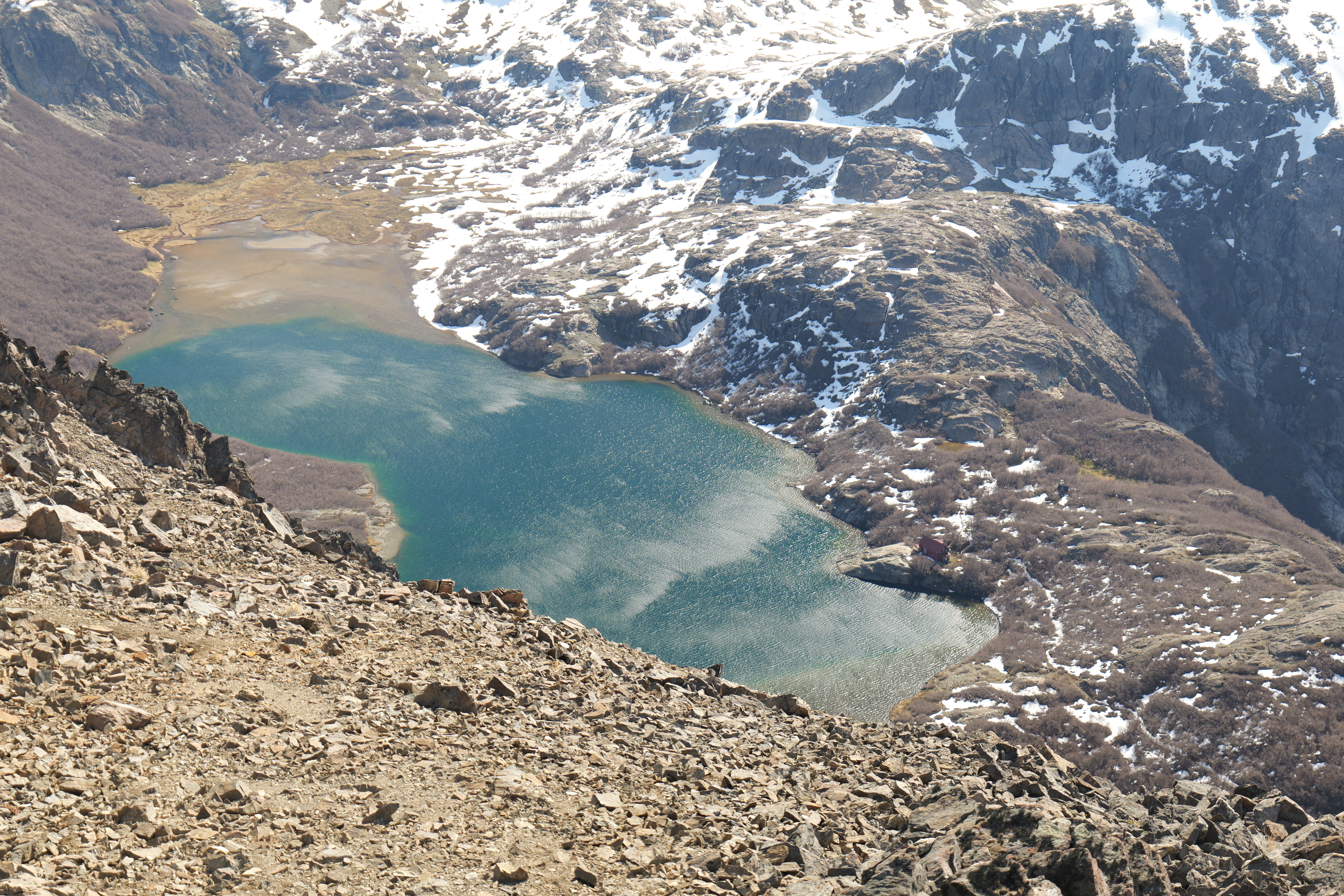
Two emotional break-downs later, we arrived at the bottom mentally, emotionally, and physically completely spent. Nothing felt better than arriving at the refuge, taking off our shoes, and enjoying a hot tea. We arrived just around golden hour and in time for the sunset, which was nothing short of amazing. The common area in the refuge had floor-to-cieling windows, allowing for maxium views of the lake and mountains that towered above us. The three of us had our own room with bunk beds, and the room was actually surprisingly very warm. The only downside was that the bathrooms were in a separate building that was actually a couple hundred meters down a little trail. This is fine during the daytime, but is difficult when you are someone like me, who almost never makes it through a night without needing to get up to pee. Though it would definitely have been frowned upon, when I inevitably had to get up during the night, I went off and found some bushes to go in rather than trying and navigate the slippery, muddy, narrow trail to the bathroom by myself in the dark.
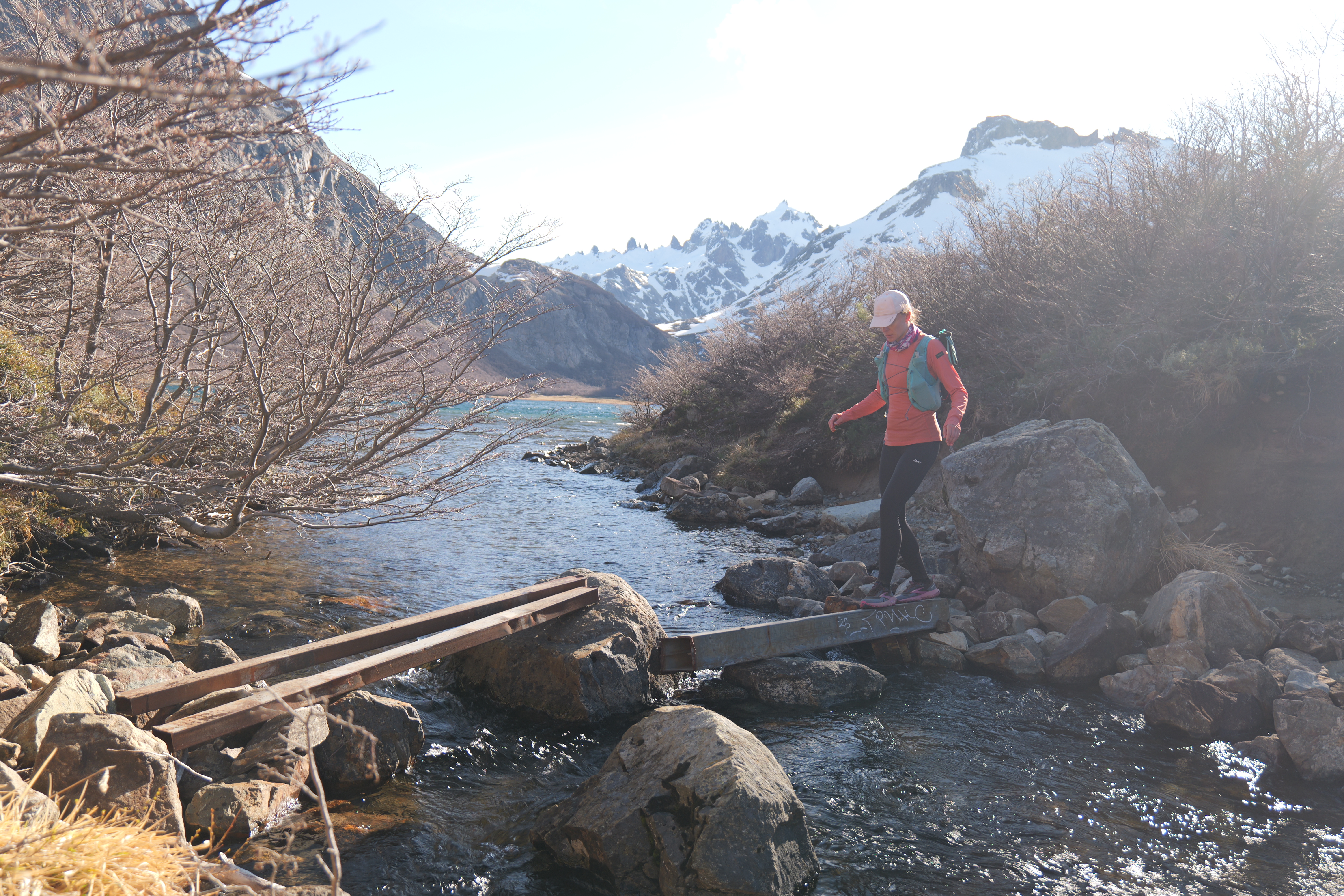
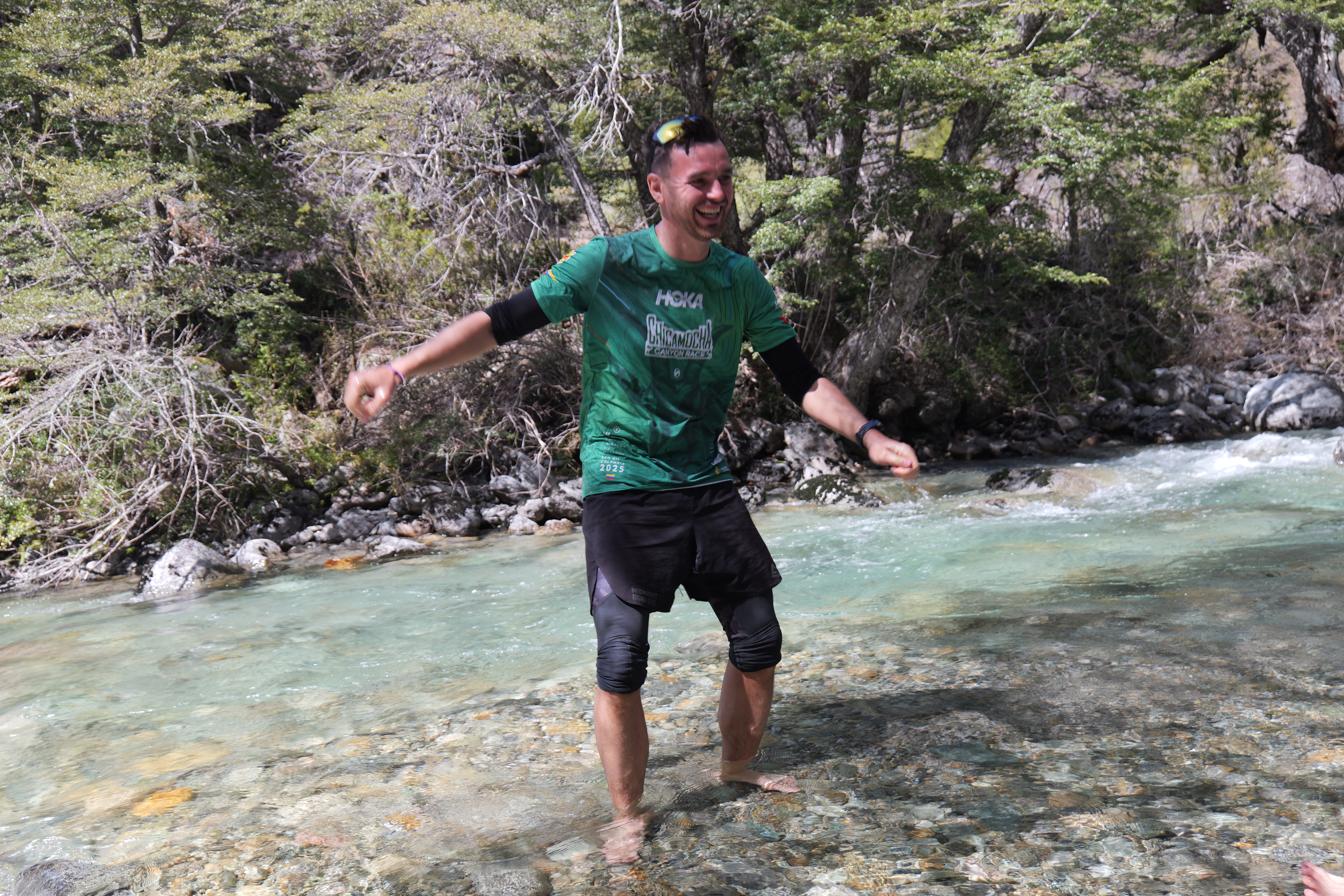
We had breakfast in the refuge the next morning before heading off back towards town. This trail was a welcomed changed after the intensity of the day before - not technical, mostly gradual downhill, beautiful scenery, plants, and singing birds. We even got to see one of the region’s Giant Woodpeckers, busy working away at pecking a massive hole into the side of one of the trees. As we were walking, we were mesmerized by the streams and rivers flowing down from the mountains. The water was so incredibly clear, it made you feel like swimming. Of course, this is glacial water, so we knew that swimming priobably wouldn’t be feasible. Finally, however, when a section of the trail right up along the riverbead, we couldn’t resist to at least dip our feet in. We took our shoes and socks off, rolled up our pants, and one by one took a turn wading out into the stream - Jo first, then Patrick, then myself. I watched the boys go first and knew that this water was going to be cold, but I still wasn’t fully prepared. I first waded out into the shallow part, which came up to about around my ankles. I was going to stop there, but Jo and Patrick urged me to go out a little further. I reach the patch they told me to go to, where the water was now part-way up my calves. Here, there is a small current. Within seconds, my feet and ankles went for cold to painfully cold - the water, or I guess I should say, the melted ice, was so cold it made your joints and even bones hurt. I got out of there as quickly as I could, that was quite enough for me!
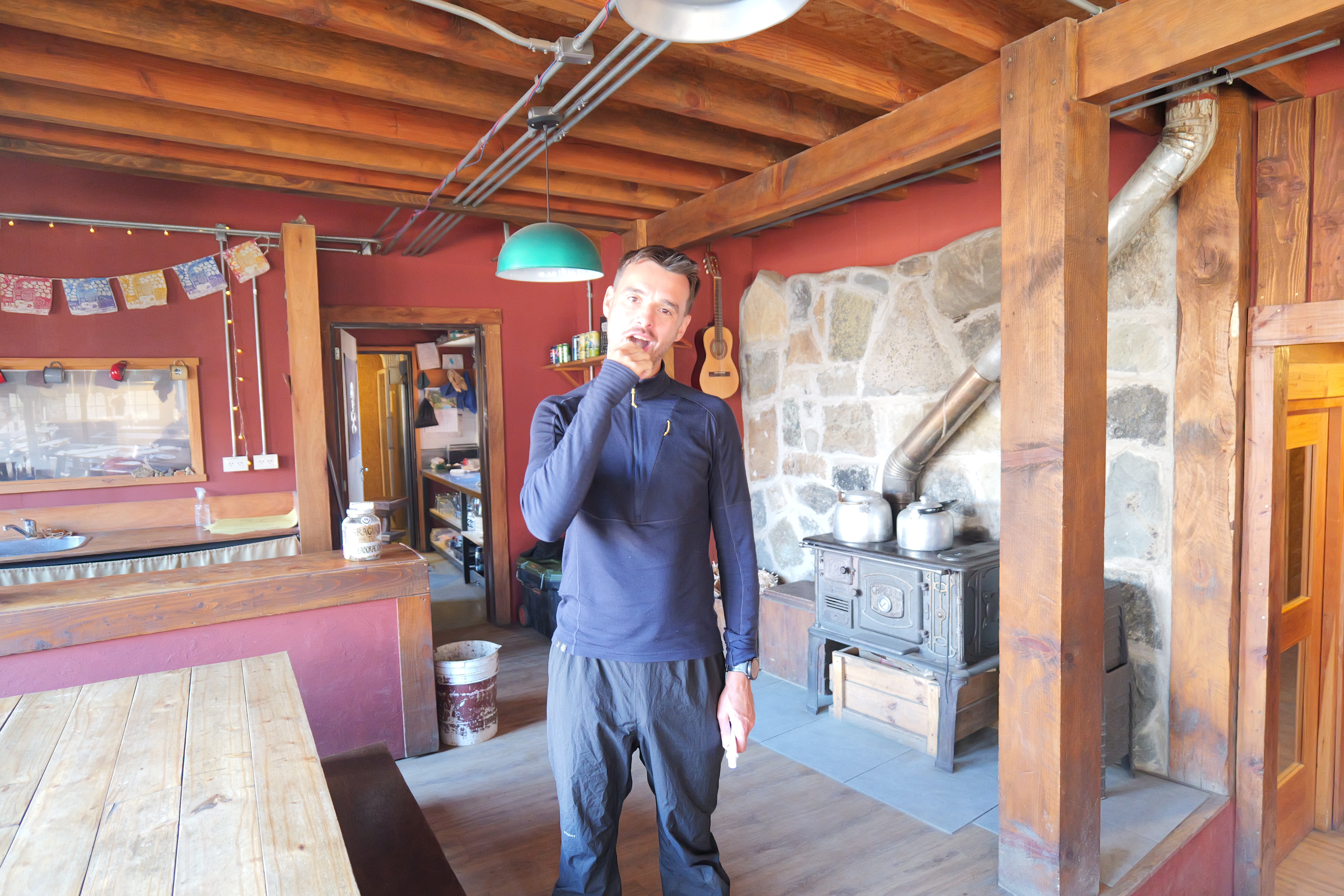
After about a kilometer more of walking, we reached the trail head. The only thing was that this trail head was just at the end of a long, dirt road. No towns, buses, or taxis - nothing. With nothing else to do but keep going, we walked another kilometer or so before we reached the main road. Still, Bariloche was another few kilometers away. Not really wanting to walk so far, we were getting ready to have to hitch hike, when finally one of our phones got service. Even more surprising, we were able to order an Uber. Twenty minutes later we were in the Uber and making our way back to Bariloche.
The next day, we took a bus back across the border to the city of Puerto Montt in Patagonia, Chile. Puerto Montt, itself, is nothing special - it has a nice boardwalk, and that’s about the best thing that can be said about it. What is nice, however, is that it is in the Lake District of Chile, surrounded by small towns and national parks. We went took a bus and ferry boat ride to the small town of Hornopiren. We were originally going to go to Douglas Tompkins National Park, which was Chile’s first national park, however, it was further away from Puerto Montt than we realized. I had wanted to kayak there. I’d read about these amazing kayaking and camping trips that you can do through the fjords in the park. After a bit more research, however, I knew that this wouldn’t be possible. In order to do it autonomously, you needed to have your own car and kayaks, not to mentions tents. Patrick didn’t have his tent with him and ours barely fit two people, let along three. Also, none of us were able to rent a car, because all of our cards functioned as a debit card in Chile. Doing a guided tour, where they provide everything, including transport, for you, was out of the question, as the cheapest one I could find was still over $1000 per person. Hiking there would also be difficult without a car, and the parks in Patagonian Chile don’t have refuges the way they do in Argentina, so you have to camp. Again, Patrick didn’t have a tent.
With that, we scrapped the plan to go to Douglas Thompkins and instead went to Hornopiren, which was situated next to some other parks with some day trails we could do.
An important difference to note between Chilean and Argentine Patagonia is the difference in climate. The Argentine side is much more arid, whereas the Chilean side runs along the Pacific Ocean. this means that the clouds pick up water over the ocean and dump it all on the Chilean side of the mountain range - aka it’s incredibly green, but also a lot more rainy. The first day we arrived in Hornopiren, it was raining quite heavily. The next day, however, it was beautifully sunny. We decided to take advantage and go attempt a trail run in the national park next to the town.
To get there, we had to hitchhike, as there are no buses. This is no problem as hitchhiking is quite common in this area of Chile. We started jogging in the direction of the park, signalling to any car that went by that we were looking for a ride. It wasn’t long before a man picked us up, and he was friendly enough to drive us all the way to the park entrance. It was a Saturday, so maybe he didn’t have so much to do that day. He was wonderfully friendly, the only problem is that he had the thickest, most Chilean accent that I have perhaps ever come across. If you know anything about the Chilean accent, you’ll know that even native spanish speakers from other countries often can’t understand what Chileans are saying. My capacity to understand the Chilean accent is decent, but this man was impossbile. I couldn’t even make out where one word was ending and another was beginning. It was as if sounds were just sort of bubbling out of his mouth. At one point he said something and then looked at me through the rearview mirror. Patrick looked at me from the passenger seat and, in seeing my blank face, said slowly to the man “puedes repetirlo por favor?”, can you repeat that, please? The man abliged, however, he didn’t really slow down, enunciate, or change his cadence much, so it didn’t do us much good.
Finally, we arrived at the park entrance, where we optimistically started off on the trail. It was a little bit wet, but we figured that it would be, so we were prepared for it to be muddy. Quickly, however, as we entered the trail, we found something much more than just mud. It was a complete bog. We were trying to precariously balance our way across fallen logs and protruding rocks in hope of not completely sinking in the water/mud. As you can imagine, we were not so successful, and it was only a matter of time before all of us were soaked up to our mid-shins in mud and water. The trail was supposed to eventually arrive at a nice lake, but looking at the state of the trail, I knew that it wasn’t likely to improve. Jo and Patrick, however, wanted to keep going, claiming that we were going mostly uphill towards the lake, so it would get drier the further up we went. This annoyed me, as we had come to do a trail run yet we were barely moving. There were also a fair amount of bugs because of all the still water around, so while the trail was quite beautiful, I wasn’t eactly enjoying it. I voiced my opinion, but was overruled and so we continued. This made me quite grumpy, and I have to admit I let my negative mindset affect my attitude for longer than I should have.
Finally, after a couple of hours and having not even reach half way to the lake, the boys came to the same conclusion that I had much earlier: We’re not really running, the novelty of balancing on the logs etc had worn off, and the trail likely won’t ever really be dry enough to actually run on. With that, we turned around and made or way back. Despite a few close calls, none of us actually fell down into the mud, we only sunk into with our feet and legs. Once we got out of the trail, we went to the stream flowing beside the trail to wash the mud off of our shoes before running along the dirt road towards our hotel. After about five or six kilometers we reached the main road, where we then hitchhiked back to the town. I had to wonder if maybe that was what the man from the first hitchhike was trying to tell us - that the trail would be a lost cause.
The rest of the day we spent working and visiting the town. Hornopiren was quite cute, tucked in alongside the fjords. The next morning, Patrick went out for another run. Jo and I did not join him, however, as we were still trying to use this time for more rest, whereas Patrick was training for a marathon. It was a beautiful sunny day again, so we took our mugs of coffee and decided to go for a walk, instead. We were walking along the dirt road when a big, white, fluffy dog came running out from a neighboring property. The dog’s name was Lina, and was the dog that often hung out on the property where we were staying. She didn’t belong to the owner of our accomodation, but she enjoyed visiting the neighbors, especially the cabins where we were staying. Jo and I absolutely loved her. Lina was so friendly and loved pets and belly rubs more than anything. She happily joined us for a portion of our walk, until we reached a point that was evidently outside of her home territory. No problem - we picked her back up on our way back.
From there, we headed back to Puerto Montt, where we would take a night bus all the way up to Santiago. With that, our Patagonian adventure had come to a close.